The Penguin | World Wetlands Day: Conserve without isolating
- Publicado el 05.02.2026
- Escrito por Angel Fondon
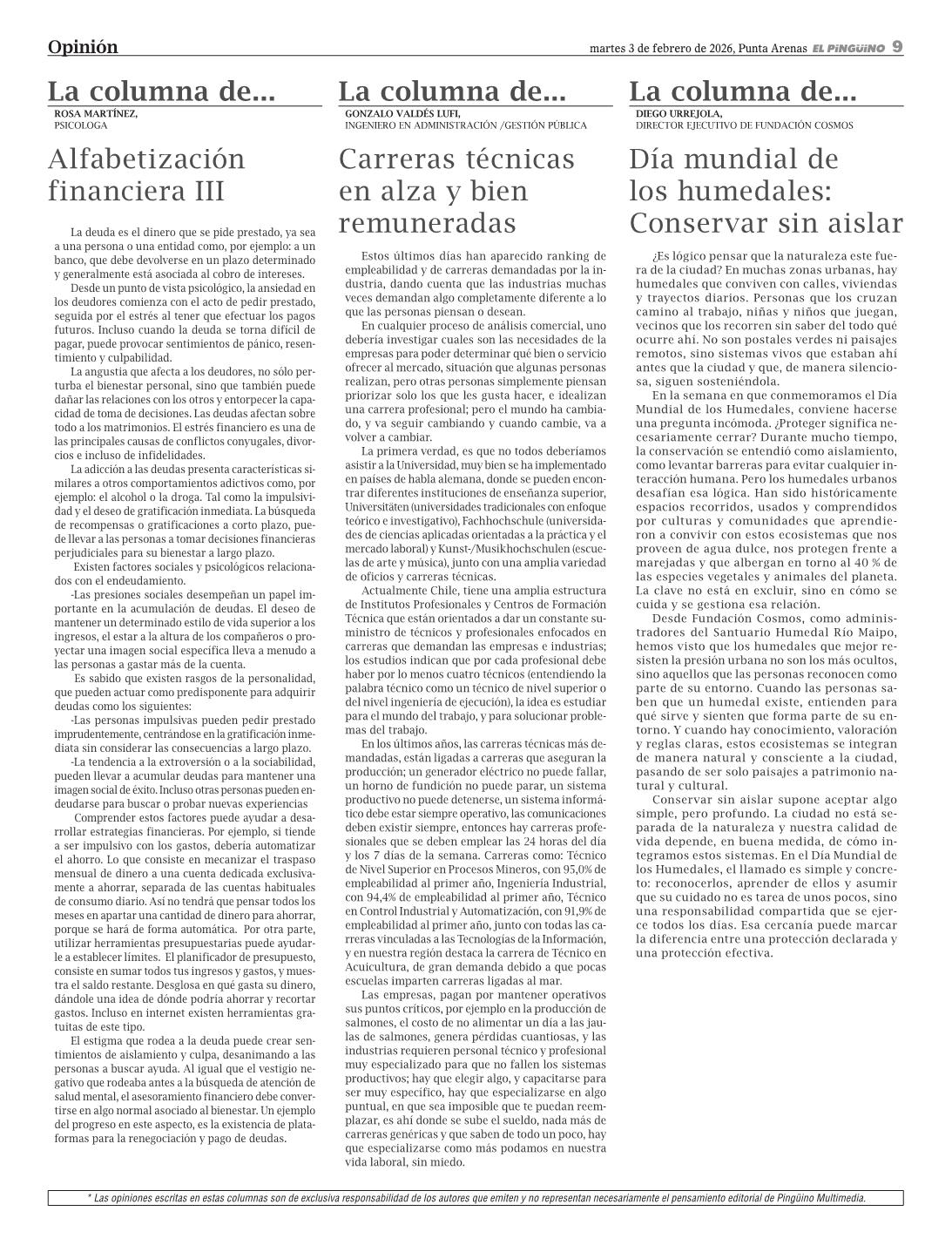
Column by Diego Urrejola, executive director of the Cosmos Foundation
Is it logical to think that nature is outside the city?
In many urban areas, wetlands coexist with streets, homes, and daily commutes. People cross them on their way to work, children play, and residents walk through them without fully understanding what’s happening there. These aren’t green postcards or remote landscapes, but living systems that existed before the city and silently continue to sustain it.
In the week that we commemorate World Wetlands Day, it is worth asking an uncomfortable question. Does protecting necessarily mean closing? For a long time, conservation was understood as isolation, as erecting barriers to prevent any human interaction. But urban wetlands defy that logic. They have historically been spaces traversed, used, and understood by cultures and communities that have learned to coexist with these ecosystems that provide us with fresh water, protect us from storm surges, and are home to around 40% of the planet’s plant and animal species .
The key lies not in exclusion, but in how that relationship is nurtured and managed. At Fundación Cosmos, as administrators of the Río Maipo Wetland Sanctuary, we have observed that the wetlands that best withstand urban pressure are not the most hidden, but rather those that people recognize as part of their environment. When people know a wetland exists, they understand its purpose and feel it belongs to their surroundings. And when there is awareness, appreciation, and clear regulations, these ecosystems integrate naturally and consciously into the city, transforming from mere landscapes into natural and cultural heritage.
Conserving without isolating means accepting something simple yet profound : the city is not separate from nature, and our quality of life depends, to a large extent, on how we integrate these systems. On World Wetlands Day, the call is simple and concrete: recognize them, learn from them, and accept that their care is not the task of a few, but a shared responsibility exercised every day. This close connection can make the difference between declared protection and effective protection.