San Antonio Leader || Study reveals Maipo River estuary is a “nursery” for endemic fish
- Publicado el 03.09.2025
- Escrito por Angel Fondon
Cosmos Foundation analysis states that this ecosystem is vital for the reproduction and survival of the country’s unique species.
A recent study on the ichthyofauna of the Maipo River Wetland Nature Sanctuary, conducted between 2024 and 2025 by the Cosmos Foundation, revealed that the Maipo estuary is a nursery for endemic fish and others at risk of conservation. This is just one of the results of the analysis led by the foundation that manages this sanctuary. The research was conducted “through four seasonal surveys at 10 sampling points, in order to establish a specific baseline on the richness and abundance of fish in this key ecosystem at the mouth of the Maipo River,” explained Cosmos.
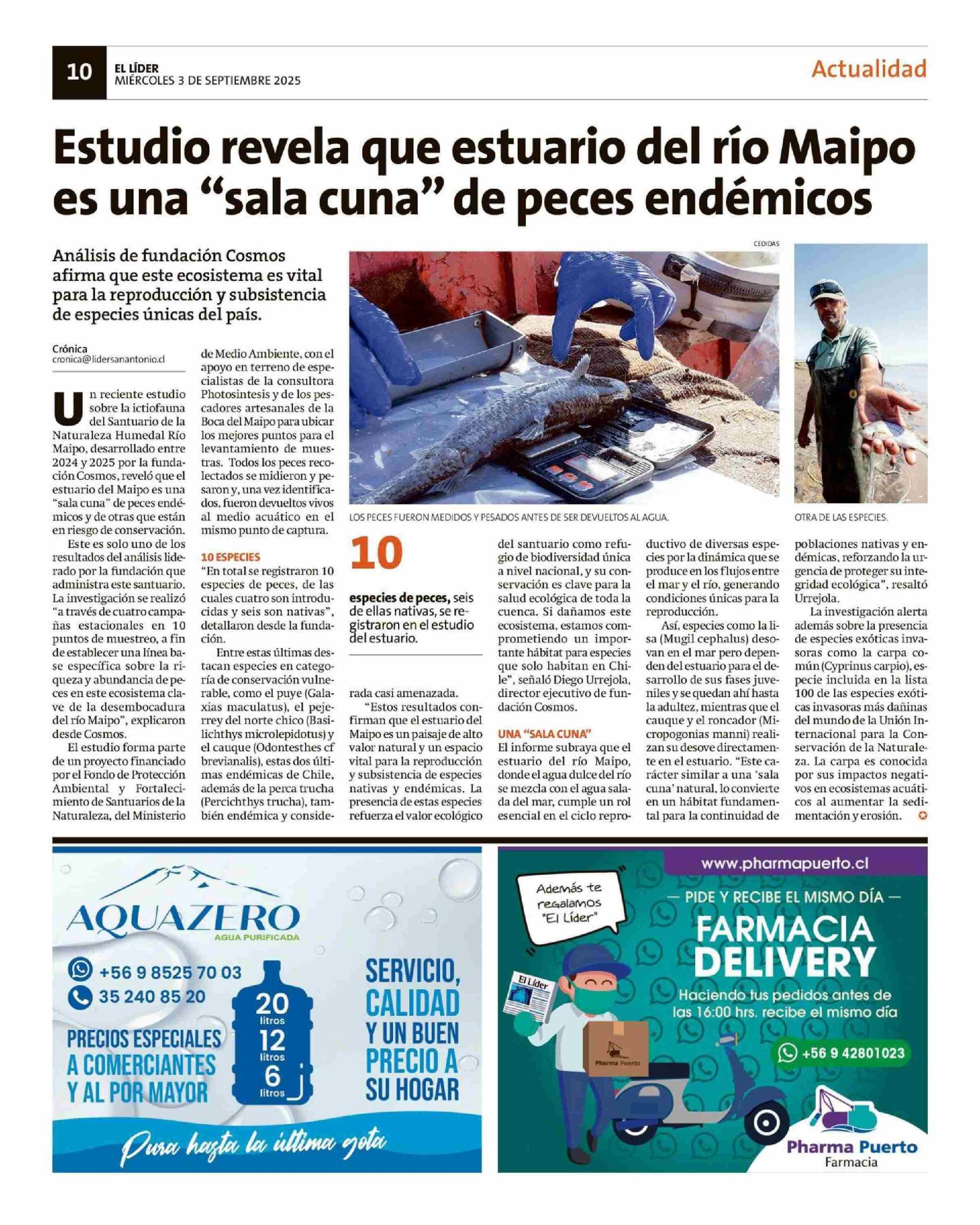
The study is part of a project funded by the Ministry of the Environment’s Environmental Protection and Nature Sanctuary Strengthening Fund, with on-site support from specialists from the consulting firm Photosintesis and artisanal fishermen from Boca del Maipo to locate the best sampling points. All collected fish were measured and weighed, and once identified, they were returned alive to the aquatic environment at the same point of capture.
10 SPECIES
“A total of 10 fish species were recorded, of which four were introduced and six were native,” the foundation explained.
Among the latter, there are species in the vulnerable conservation category, such as the puye (Galaxias maculatus), the northern small silverside (Basilichthys microlepidotus) and the cauque (Odontesthes cf brevianalis), the latter two endemic to Chile, in addition to the trout perch (Percichthys trucha), also endemic and considered almost threatened.
“These results confirm that the Maipo estuary is a landscape of high natural value and a vital space for the reproduction and subsistence of native and endemic species. The presence of these species reinforces the sanctuary’s ecological value as a refuge for unique biodiversity at the national level, and its conservation is key to the ecological health of the entire basin. If we damage this ecosystem, we are jeopardizing an important habitat for species that only live in Chile,” said Diego Urrejola, executive director of the Cosmos Foundation.
A ‘NURSERY’
The report emphasizes that the Maipo River estuary, where freshwater from the river mixes with saltwater from the sea, plays an essential role in the reproductive cycle of various species due to the dynamics of the flow between the sea and the river, creating unique conditions for reproduction.
Thus, species such as the mullet (Mugil cephalus) spawn in the sea but depend on the estuary for their juvenile development and remain there until adulthood, while the cauque and the grunt (Micropogonias manni) spawn directly in the estuary. “This natural nursery-like nature makes it a fundamental habitat for the continuity of native and endemic populations, reinforcing the urgency of protecting its ecological integrity,” Urrejola emphasized.