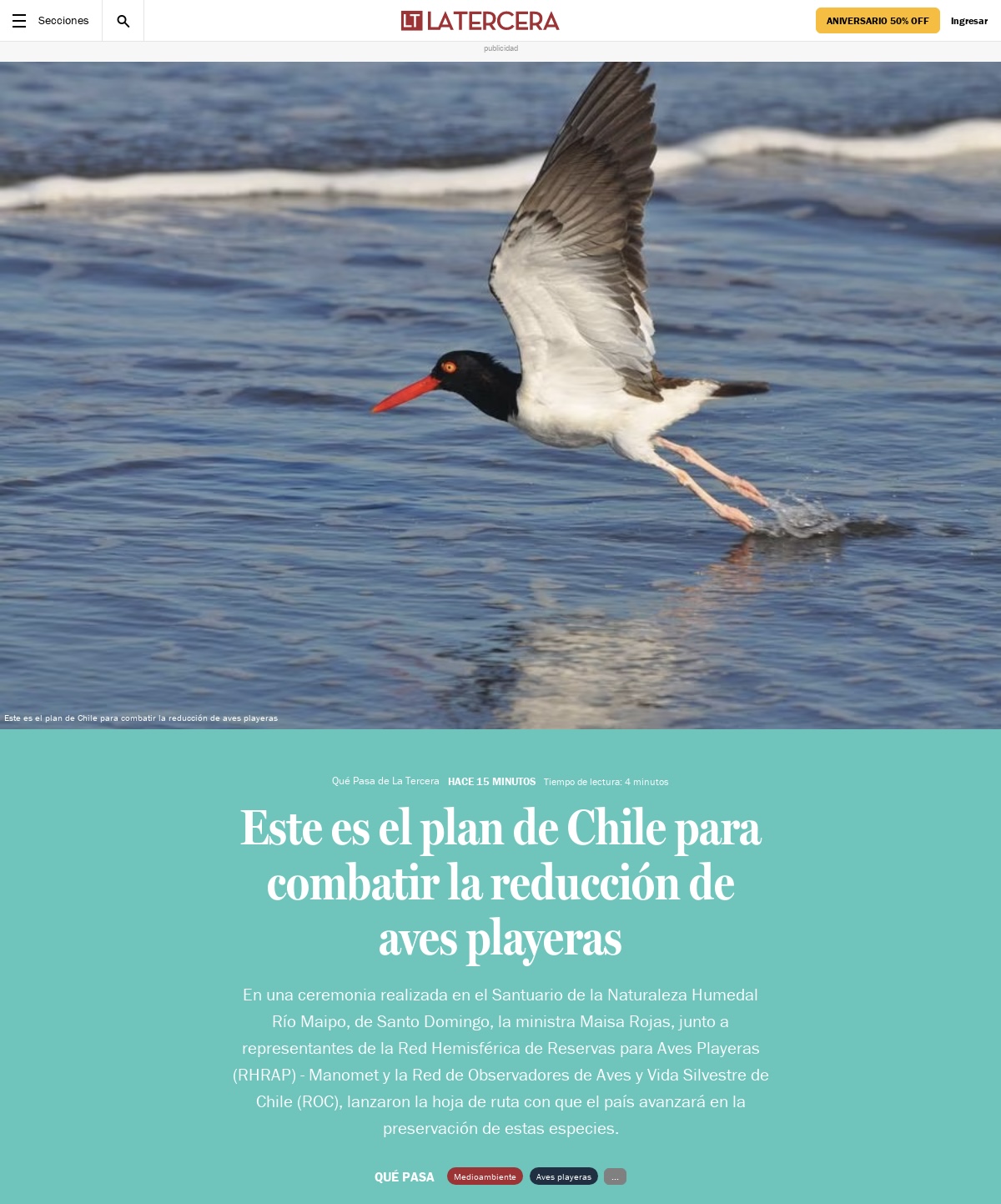
La Tercera | Chile presents plan for shorebird conservation
- Published on 07.09.2023
- Written by Angel Fondon
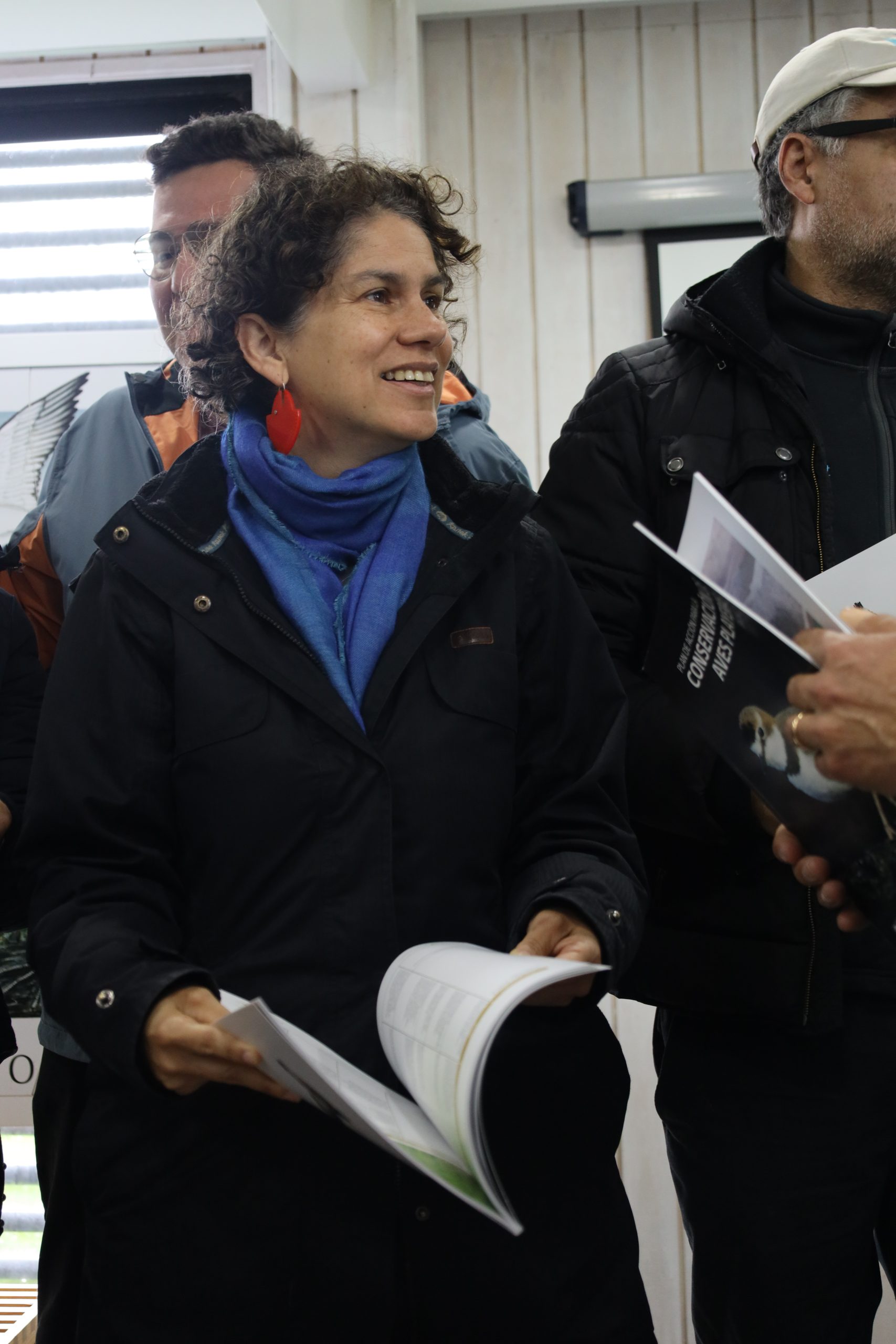
In a ceremony held at the Maipo River Wetland Nature Sanctuary in Santo Domingo, Minister Maisa Rojas, along with representatives from the Western Hemisphere Shorebird Reserve Network (WHSRN) – Manomet and the Chilean Bird and Wildlife Observers Network (ROC), launched the country’s roadmap for advancing the preservation of these species.
At a ceremony held at the Maipo River Wetland Nature Sanctuary, a site of great ecosystem value managed by the Cosmos Foundation, attendees learned about the Action Plan that the Ministry of the Environment, in collaboration with academia, non-governmental organizations, municipalities, and other public institutions involved in the conservation of these birds and their habitats, has been working on to advance their protection.
The event was attended by authorities such as the Regional Secretary of the Environment of Valparaíso, Hernán Ramírez; the Provincial Presidential Delegate, Caroline Sireau; the Maritime Governor of San Antonio, Patricio Torres; the Mayor of Santo Domingo, Dino Lotito; and councilors from that commune. They were also present at the Maipo River Wetland, one of the most important coastal wetlands in central Chile in terms of biodiversity.
Regarding the Action Plan, Minister Maisa Rojas explained that “shorebirds are highly threatened species at the global and national levels, which highlights the importance of having this plan, which will guide the actions and efforts of various stakeholders to increase and strengthen the conservation capacity of shorebirds and their habitats. It is very important to define lines of action that mitigate and reduce the main threats to this group of birds.”
It is estimated that 50% of all shorebird species on the planet are experiencing population declines; in addition, a dozen species in the Americas have recorded cumulative declines of more than 70% over the past four decades.
Ivo Tejeda, executive director of the ROC and one of the organizations that worked on the Action Plan, highlighted its scope: “The Plan covers a range of habitats and sites, from the far north of Chile to Patagonia, enabling nearly 50 species of resident and migratory shorebirds to successfully complete their life cycles. The action lines contained in the plan provide a roadmap for collaborative action to mitigate these threats, with actions that in many cases involve long-term work with local communities, as well as a broad range of actors from the public, private, academic, and civil society sectors.”
Check out the full article here.