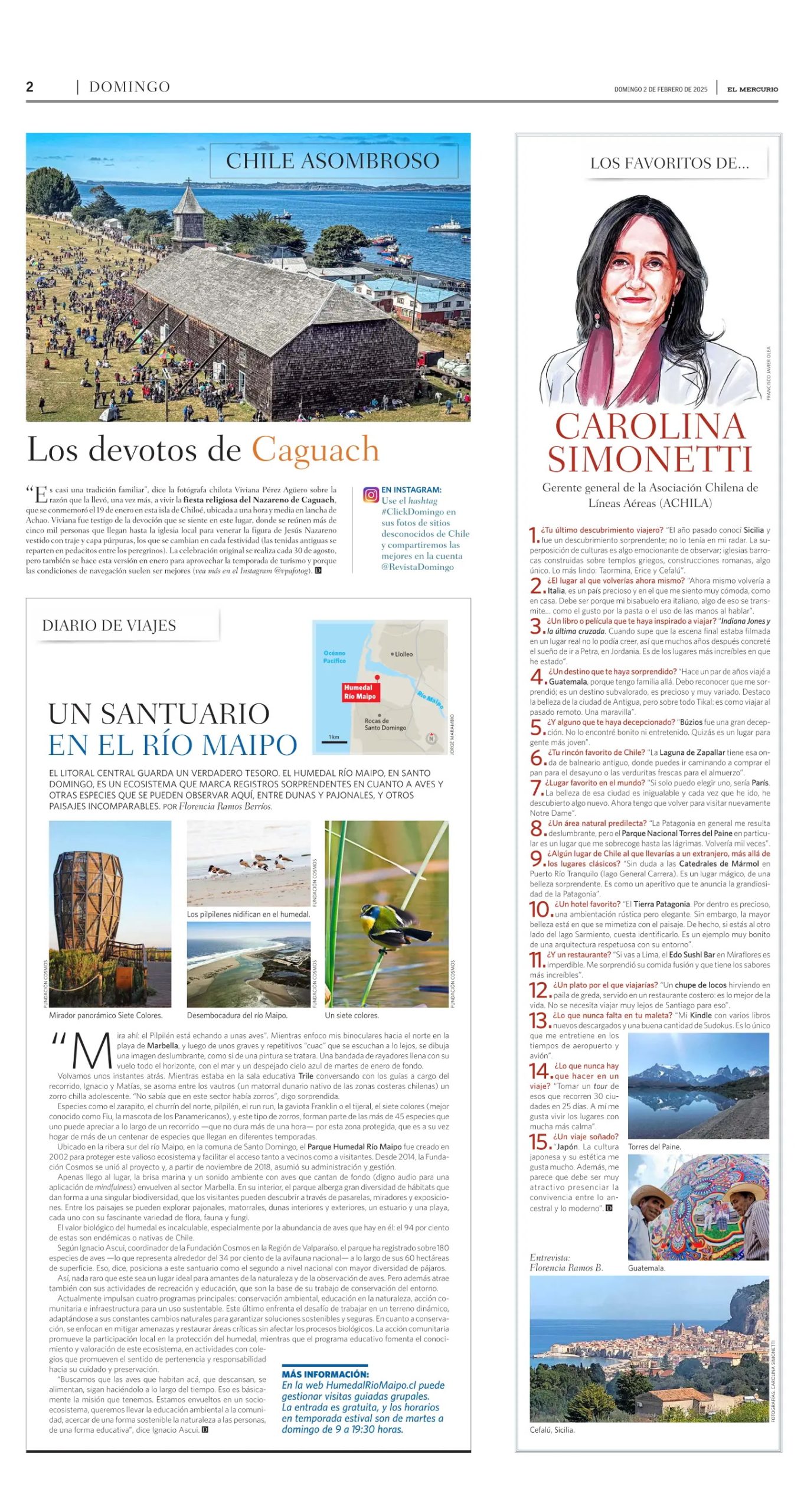
Domingo Magazine, El Mercurio || A sanctuary on the Maipo River
- Publicado el 02.02.2025
- Escrito por Angel Fondon
The central coast holds a true treasure. The Maipo River Wetland in Santo Domingo is an ecosystem that records surprising numbers of birds and other species that can be observed here, among dunes and grasslands, and other incomparable landscapes.
‘Look there: the Pilpilén is kicking out some birds.’ As I focus my binoculars northward on Marbella beach, and after some deep, repetitive quacks are heard in the distance, a dazzling image emerges, like a painting. A flock of skimmers fills the entire horizon with their flight, with the sea and a clear blue Tuesday sky in January in the background.
Let’s go back a few moments. While I was in the Trile educational room, chatting with the tour guides, Ignacio and Matías, a young fox peeped out from among the vautros (a dune scrub native to coastal Chilean areas). “I didn’t know there were foxes in this area,” I said, surprised.
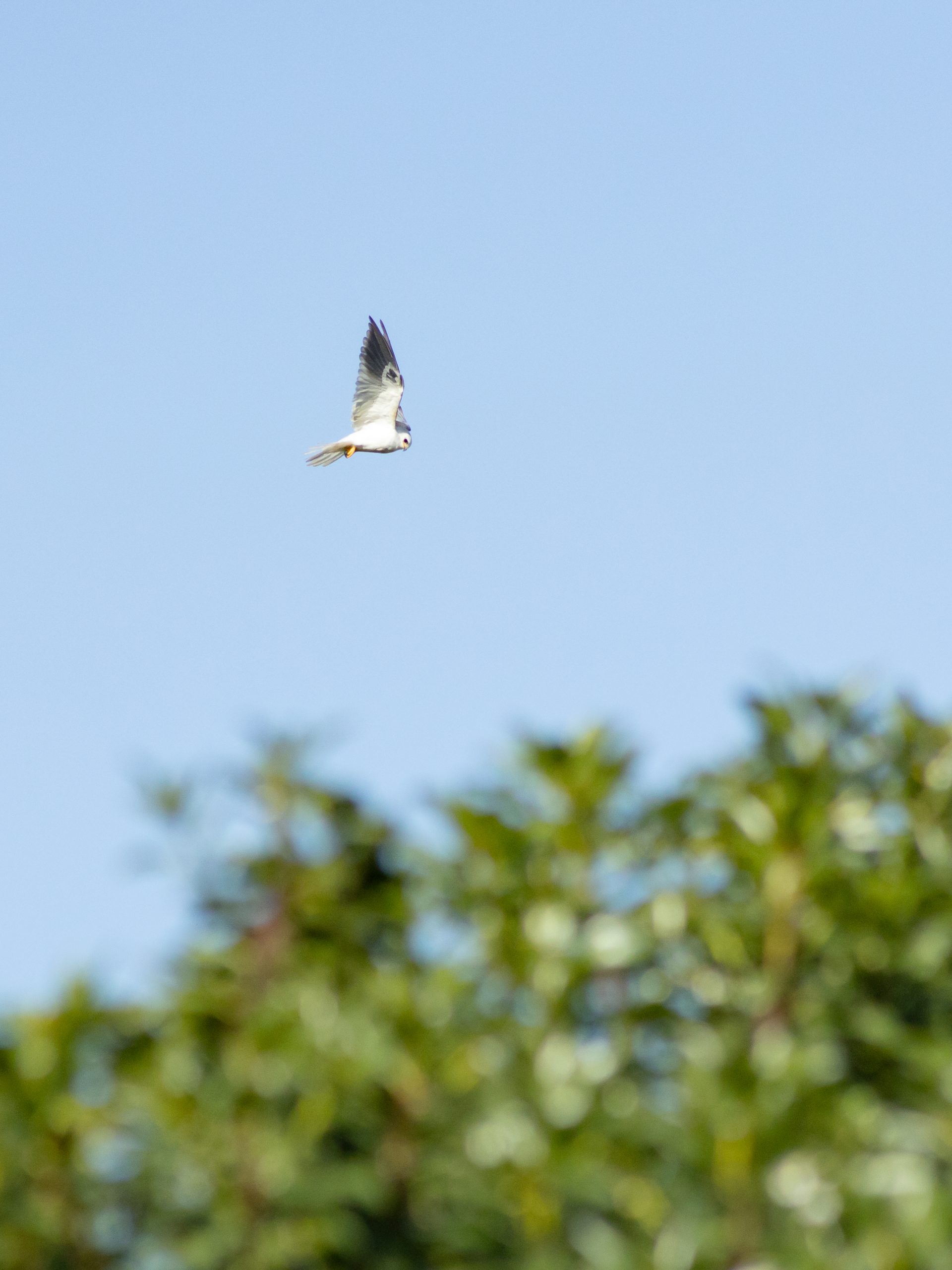
Species such as the curlew, the northern churrín, pilpilén, the run run, the Franklin’s gull or the tijeral, the seven-colored (better known as Fiu, the mascot of the Pan American Games), and this type of fox, are part of the more than 45 species that one can appreciate throughout a tour – which lasts no more than an hour – through this protected area, which is in turn home to more than a hundred species that arrive at different times of the year.
Located on the southern bank of the Maipo River, in the commune of Santo Domingo, the Maipo River Wetland Park was created in 2002 to protect this valuable ecosystem and facilitate access for both residents and visitors. The Cosmos Foundation joined the project in 2014 and, as of November 2018, assumed its administration and management.
As soon as I arrive, the sea breeze and the ambient sound of birds singing in the background (a worthy audio track for a mindfulness app) envelop the Marbella sector. Inside, the park houses a wide variety of habitats that shape a unique biodiversity, which visitors can discover through walkways, viewpoints, and exhibits. Among the landscapes you can explore are grasslands, scrublands, inner and outer dunes, an estuary, and a beach, each with its own fascinating variety of flora, fauna, and fungi.
The wetland’s biological value is incalculable, especially given the abundance of birds found there: 94 percent of these are endemic or native to Chile.
According to Ignacio Ascui, coordinator of the Cosmos Foundation in the Valparaíso Region, the park has recorded over 180 bird species—representing approximately 34 percent of the national birdlife—across its 60 hectares. This, he says, makes this sanctuary the second in the country with the greatest bird diversity.
So, it’s no surprise that this is an ideal place for nature lovers and birdwatchers. But it also attracts visitors with its recreational and educational activities, which are the foundation of its environmental conservation work.

They currently promote four main programs: environmental conservation, nature education, community action, and infrastructure for sustainable use. The latter addresses the challenge of working in a dynamic environment, adapting to its constant natural changes to ensure sustainable and safe solutions. Regarding conservation, they focus on mitigating threats and restoring critical areas without affecting biological processes. Community action promotes local participation in wetland protection, while the educational program fosters knowledge and appreciation of this ecosystem through activities with schools that promote a sense of belonging and responsibility for its care and preservation.
“We want the birds that live here, that rest and feed, to continue doing so over time. That’s basically our mission. We’re involved in a socio-ecosystem; we want to bring environmental education to the community, bringing nature closer to people in a sustainable way, in an educational way,” says Ignacio Ascui.