Educational Playgrounds – Nocedal Foundation
“Children learn through play, recognizing themselves in their own environment, learning and interacting with the mysterious and unknown. Nature has that appeal; it allows for discovery and surprise.”
The Nocedal Foundation is a non-profit institution that has been providing quality education to vulnerable students in the communities of La Pintana and Puente Alto since 1996. Within the foundation’s educational philosophy, they consider playgrounds as an additional educator, where all spaces are important to the school context. Playful learning is emphasized, neuromotor development is developed, and the school opens up to the community to share recreational spaces, among other aspects that enhance education with nature.
In this context, in 2017, the Nocedal Foundation made an agreement with the Cosmos Foundation in search of support for the design of green infrastructure for the playgrounds of its two new schools in the Bajos de Mena neighborhood in the Puente Alto commune: Trigales del Maipo and Puente Maipo, both in an area with very few natural and recreational spaces.
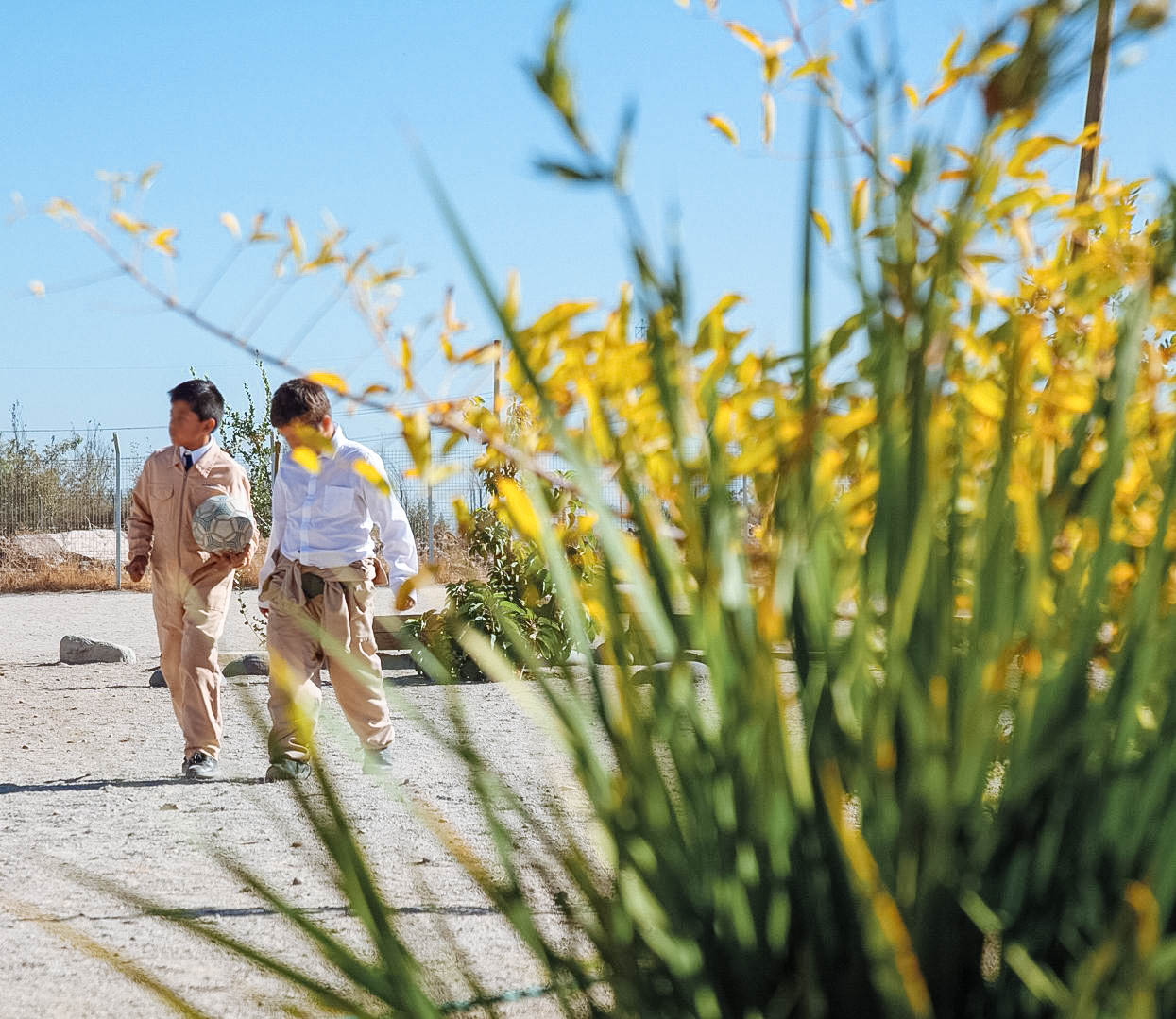
Puente Maipo School
The Puente Maipo School was under construction when the Cosmos Foundation began the physical, social, and educational project assessments to design a master plan for green spaces for the school, appropriate to its context, the needs of students, staff, families, and the educational model being implemented, both in the curriculum and the school’s principles.
Based on the proposal, the first two stages of the master plan were implemented: the elementary school playground and an educational school garden.
Since March 2017, students have had their first green play and recreation area, specifically designed for them to play and interact with nature, reaping the benefits this entails. This area intersects the school’s curriculum with the potential uses of the playground, transforming it into an educational space as well. In this case, emphasis was placed on free play and psychomotor skills, allowing them to take this knowledge beyond the classroom.
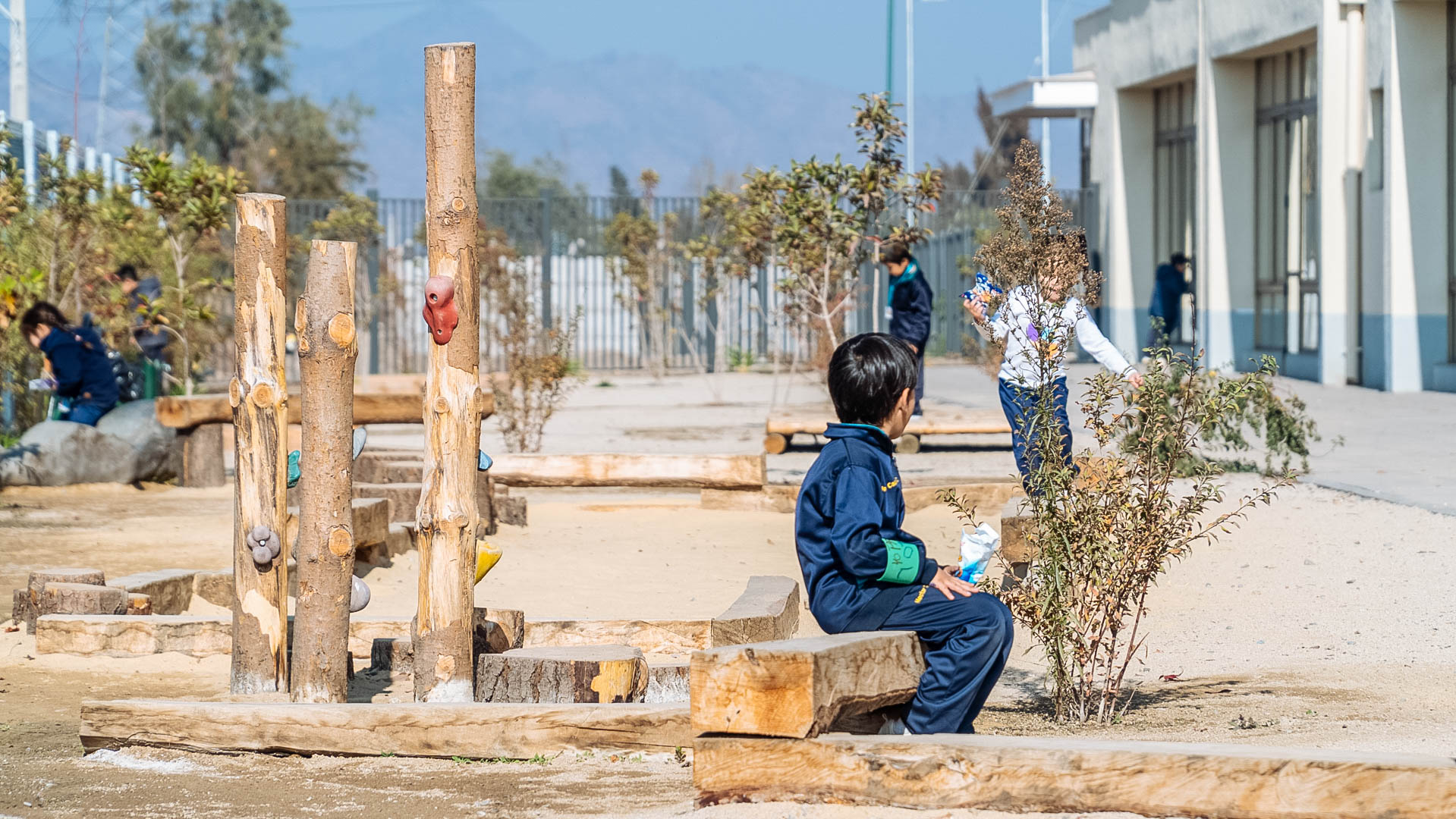
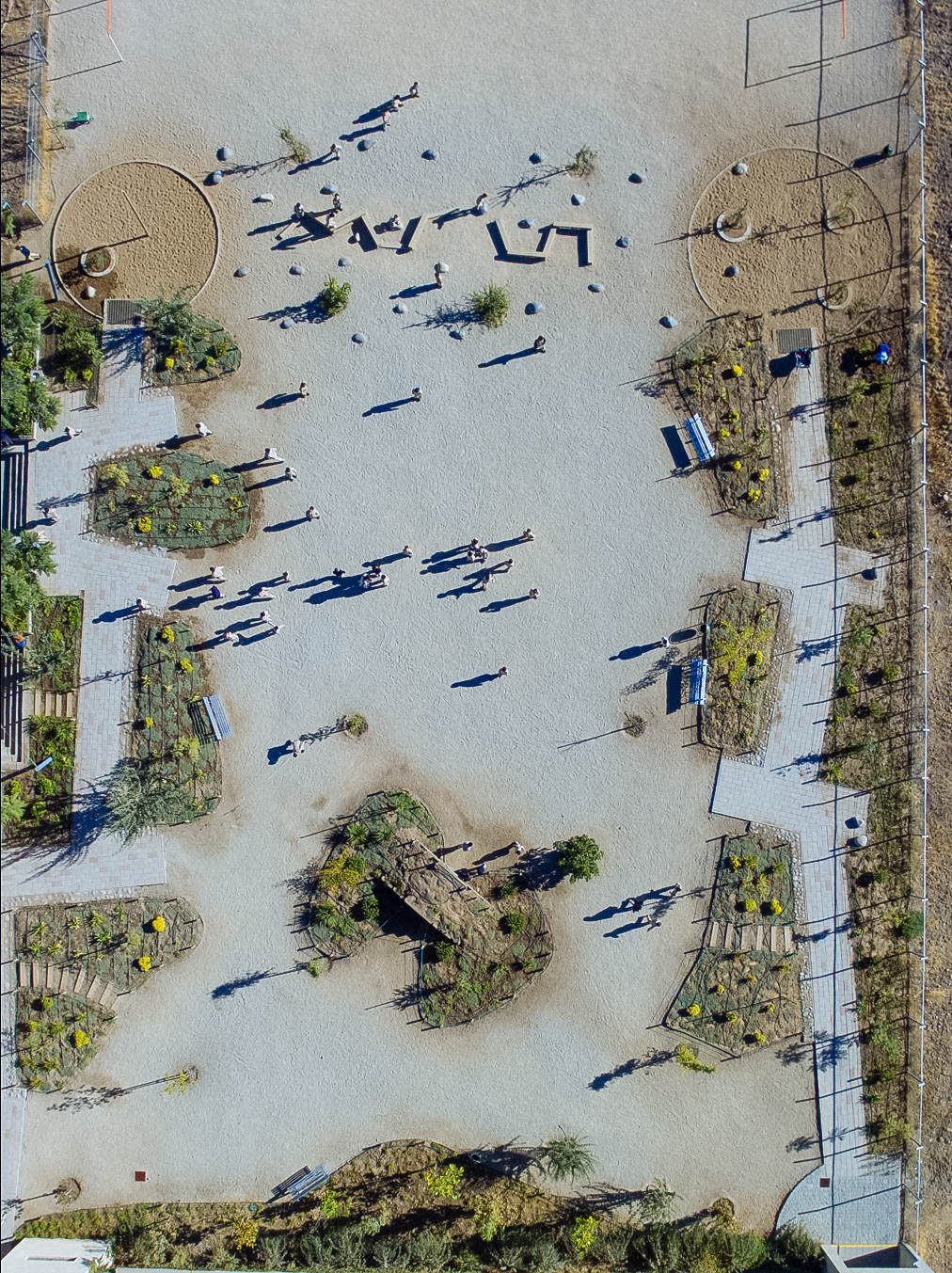
The elementary school playground consists of a large esplanade that promotes free play for children through the use of natural elements such as wooden sleepers, rocks, sand, and a central island planted with low-water plant species, beneath which runs a tunnel ideal for play. Providing an attractive alternative to the already familiar soccer field found in all the school playgrounds, the sleepers function as a circuit of challenges that invite problem-solving not only individually but also as a team, providing space for the development of gross motor skills. The playground is bordered by two paths that connect to the existing buildings and end with two circular spaces that function as play sandboxes for gathering and playing, which in turn develop fine motor skills as a tool for psychomotor and socio-emotional development.
The second phase of the educational garden is one of several included in the Natural Areas Master Plan, which the school plans to build over the long term, ultimately creating 15,000 m2 of natural areas available to the entire educational community.
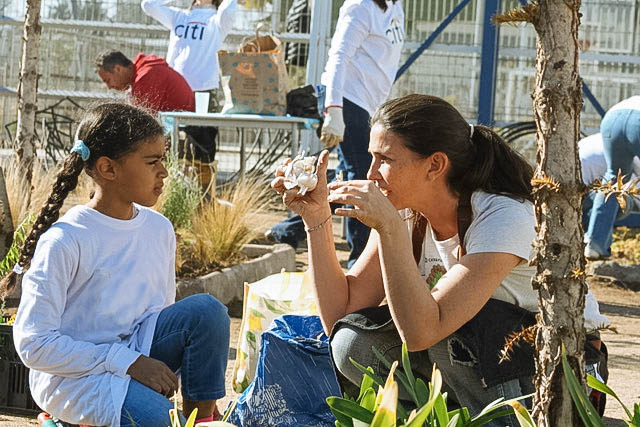
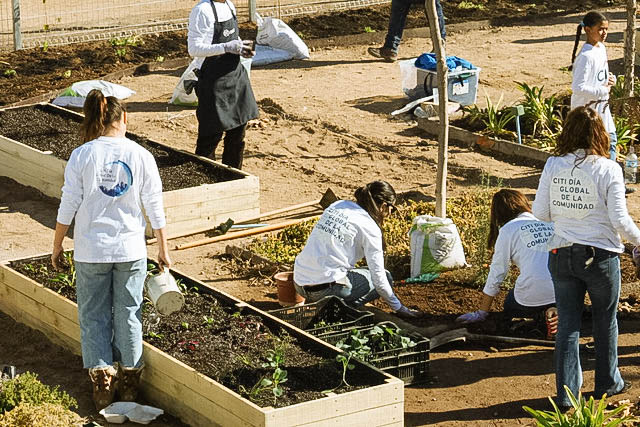
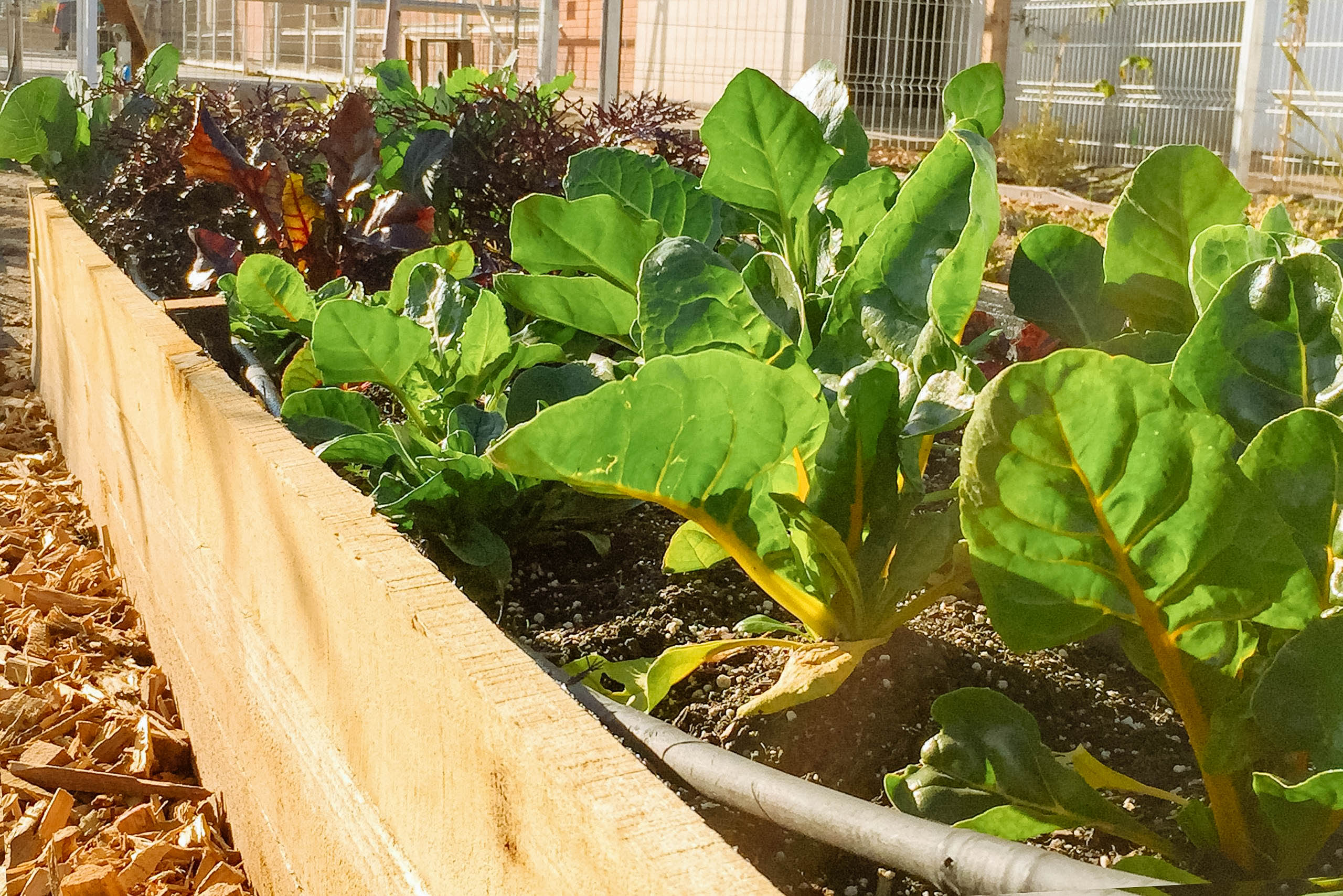
Students, parents, and teachers from this school, along with volunteers from the Citi Group and the Cosmos Foundation, worked to develop a 526 square meter area with growing beds, planters, irrigation systems, and a greenhouse, creating a large garden that will allow the students of Puente Maipo School to learn about nature. To this end, the garden is divided into four main sections: an introductory garden space; a growing and composting area; a third greenhouse space; and, finally, a central space for various uses, such as gardening workshops, math classes, and outdoor natural sciences.
Trigales del Maipo School
Based on a physical, social, and educational project assessment, and through various participatory activities involving teachers, parents, and students, the Cosmos Foundation designed a Master Plan for the school’s green spaces based on three main objectives: to allow the school’s green areas to become an extension of the neighborhood; to use the playground as a learning platform; and to foster greater identity and a sense of belonging within the school’s spaces. To develop educational tools that promote open classrooms and cross-curricular programs for all grade levels, such as the neuromotor program and the nature library.
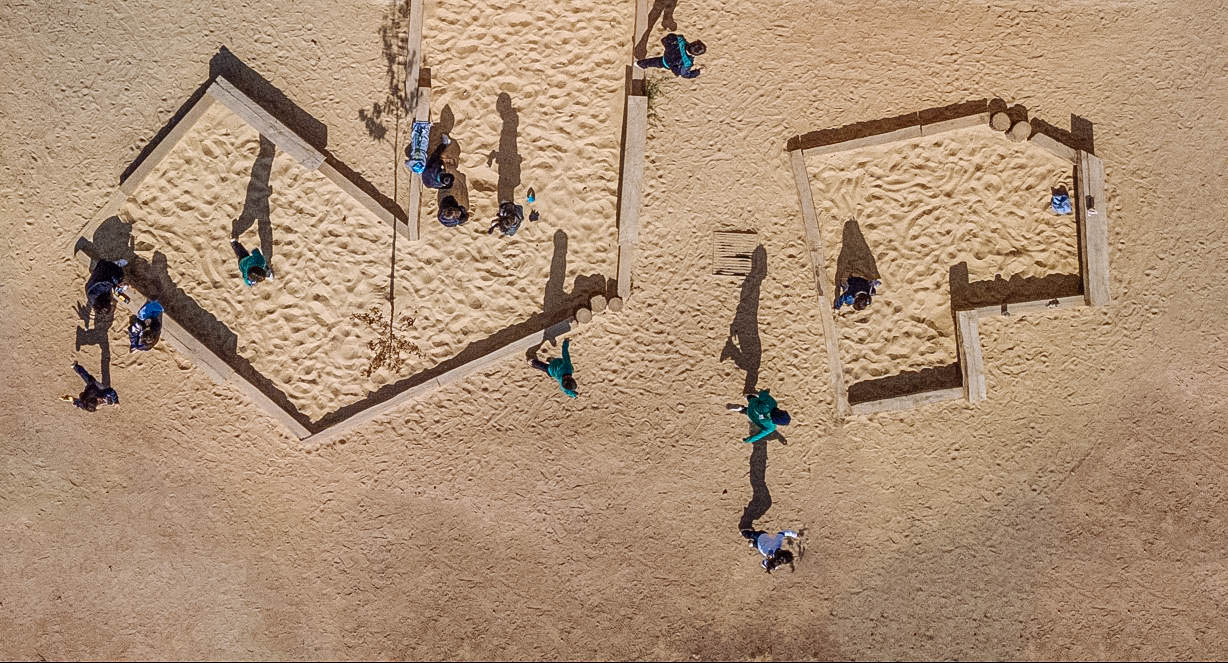
The first of these spaces to be implemented was the preschool playground. The project focused specifically on children’s neuromotor development by creating different circuits that allow for skill development through play, engaging in physical and recreational activities that explore the different senses, and supporting children’s physical and neural development throughout their childhood.
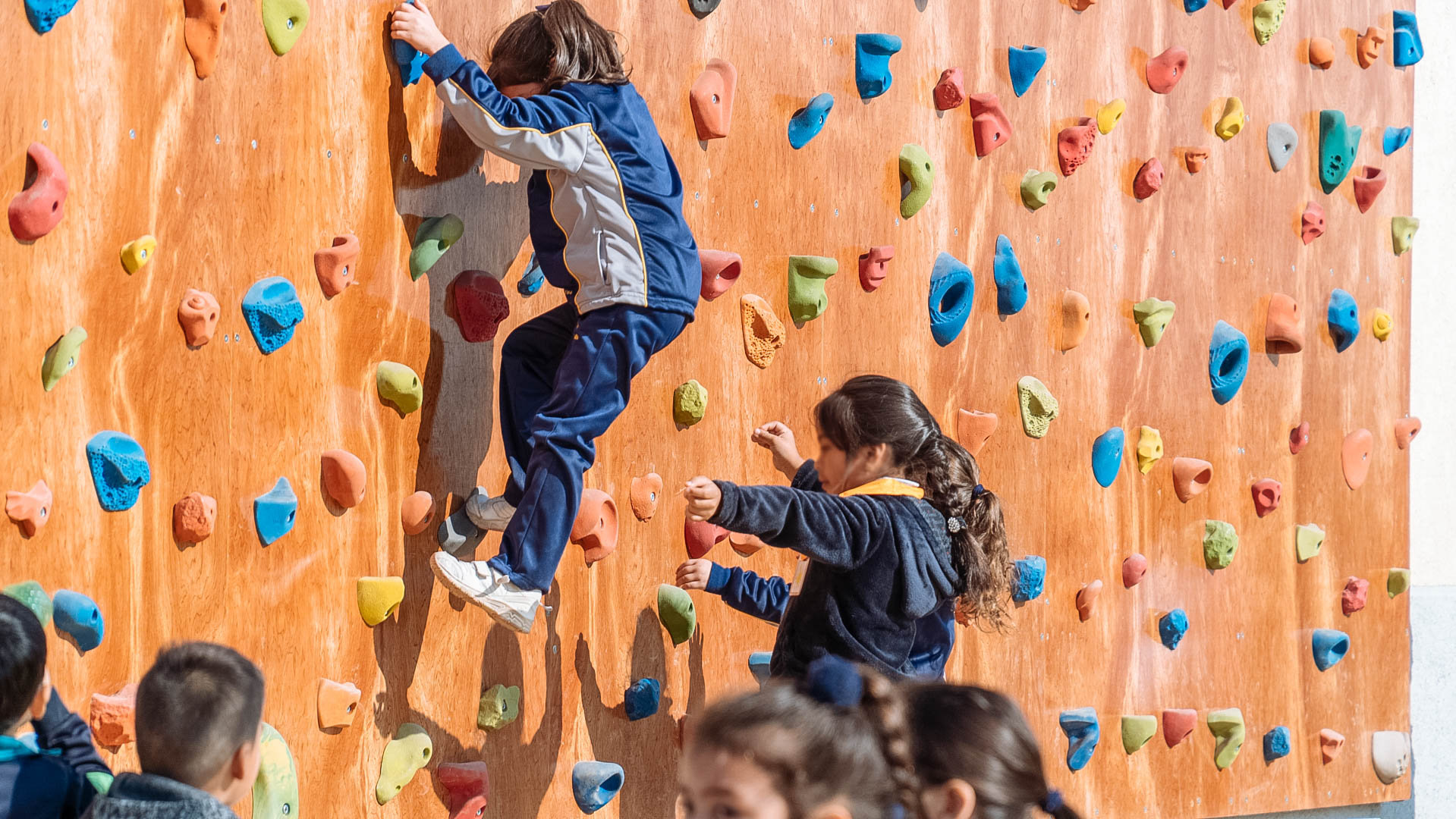
The playground began with a donation by the Mar Adentro Foundation of 28 tons of sand, used in the exhibition Algorithms of the Wind by the artist Theo Jansen. This was presented as a great opportunity to recycle a high-quality material. The project began to be implemented, and today it consists of challenge courses, logs, sandpits, and a climbing wall in a garden planted by the school’s own students.
The second stage of this playground was developed with a central play area: a one-meter-deep sand pit, from which hang structures that allow for team interaction and development, rather than individual activities: balance beams, a slide, climbing frames, and a boulder.
With these educational playgrounds, we seek to provide natural spaces for a neighborhood with few green areas, but above all, to contribute to an education in and with nature, which will educate today’s children and future adult citizens with the awareness that human beings are also nature.
Regarding the natural vision offered by the project, the master plan design proposes refuge areas for native flora and fauna. These mounds form a system that transforms the existing topography, modifying the soil. The land is transformed from a land filled with stone boulders, not very suitable for a fertile soil base, into a land with more substrate and species that can survive high temperatures and with low water requirements. It also proposes more habitable spaces where trees can grow to provide shade in the various proposed spaces. These mounds represent an important area for the southern slope, where species such as Chagual, Belloto, Molle, and Boldo can thrive.
Furthermore, in keeping with the goal of making the school an extension of the neighborhood, the garden is designed to be an open space for the entire educational community, developing an initiative that stimulates the circular economy for families, allowing them to have their own space in the garden and then take home what they harvest.