Healing Gardens Social Impact Study
Between 2023 and 2025, the Cosmos Foundation and Alberto Hurtado University conducted a comprehensive evaluation of the Healing and Therapeutic Gardens model, with the goal of generating scientific evidence on its implementation and social impact in hospitals and nursing homes in Chile.
This research—a pioneer in Chile and Latin America—was developed in three complementary stages that, together, allowed us to understand how these spaces are designed, used, and contribute to people’s overall well-being.
1. Foundations and evolution of the Healing Gardens model
This first stage systematizes the experience accumulated by the Cosmos Foundation since 2014, identifying the mechanisms through which gardens are designed and generate well-being.
It analyzes the participatory methodology used, the lessons learned in the field, and the conditions necessary for its sustainability.
2. Qualitative exploration of uses and maintenance
It delves into the appropriation and management of gardens by their user communities, examining how patients, staff, and institutional teams use and care for these spaces in their daily lives.
The study highlights the importance of participation and a sense of ownership in the maintenance and therapeutic value of gardens.
3. Social Impact Assessment
It empirically measures the effects of contact with nature on the psychological, emotional, and physiological well-being of patients, staff, and family members in public hospitals.
With a sample of more than 180 participants and quantitative and qualitative measurements, this phase confirms that Healing Gardens reduce stress, improve mood, and strengthen emotional recovery.
Findings and implications
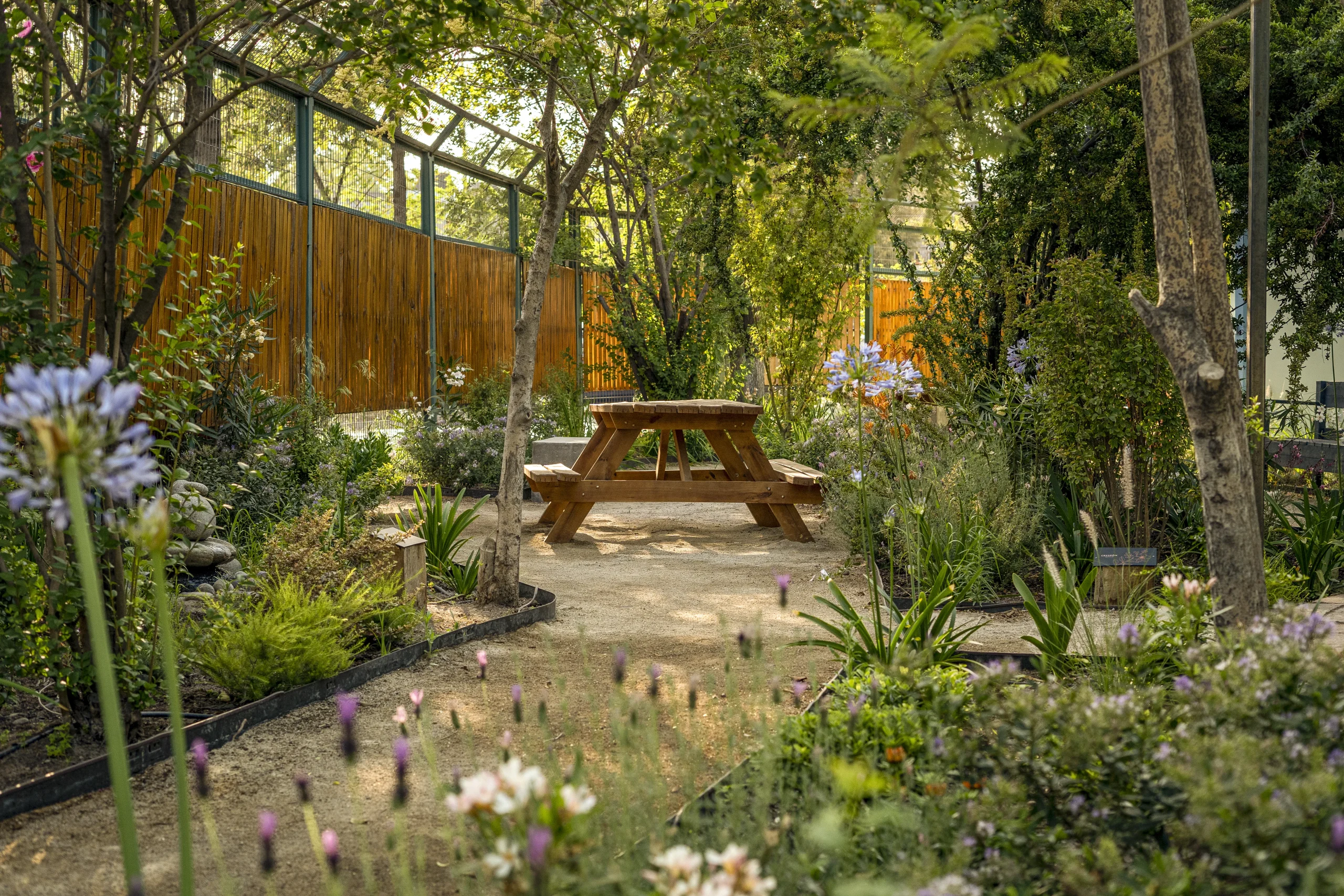
The results confirm that Healing Gardens are an effective tool for promoting the emotional and psychological well-being of patients and staff, even in highly complex hospital settings.
Evidence supports their incorporation into policies for humanizing care and promoting public health in Chile, integrating them into hospital planning as restorative spaces that improve the quality of life in healthcare facilities.
The study also suggests expanding their use beyond contemplation, incorporating them into therapeutic, rehabilitation, and psychological support programs, consolidating their value as a complementary health tool.
Finally, it is recommended that future research expand sample sizes—especially among patients and children—and evaluate more structured interventions, such as therapeutic horticulture, to further explore the social, emotional, and physical effects of these environments.