
The Maipo River Wetland and Mouth are a new site of international importance for migratory shorebirds.
- Published on 15.05.2015
- Written by Angel Fondon
As part of World Shorebird Day, which has been celebrated every September 6th since last year, the designation of a new site of international importance for the conservation of migratory shorebirds in Chile was celebrated this morning: the Maipo River Wetland and Mouth.
The ceremony took place on Marbella Beach in Santo Domingo, where Hugo Díaz, Santo Domingo’s acting mayor, and José Luis Brito, director of the San Antonio Museum, received the certificate officially designating this wetland as a new site in the Western Hemisphere Shorebird Reserve Network (WHSRN).
Regarding the importance and commitment that the municipality of the park commune has to this site, Hugo Díaz stated that “this designation is significant, as it reinforces what the municipality has been doing for quite some time, together with the Cosmos and Mar Adentro Foundations, to protect and conserve the Maipo River wetland and its ecosystem. This appointment motivates us to continue working for this noble cause, which is a commitment we have to nature and our people.”
In Chile, the Maipo River Mouth becomes the fourth WHSRN site, after the Lluta River Wetland in Arica, the Eastern Wetlands system of Chiloé, and Lomas Bay in Tierra del Fuego. The new site covers approximately 140 hectares and includes the beach, sandbar, estuary, grasslands, marshland, shrubland, sand dunes, and river mouth. Together, they form an ecosystem that is home to 132 species of birds, as well as fish, reptiles, amphibians, and some mammals. The importance of the Maipo River Wetland within the network of key sites for shorebirds is mainly due to its presence in the biogeographic population of the Curlew and Pilpilén.
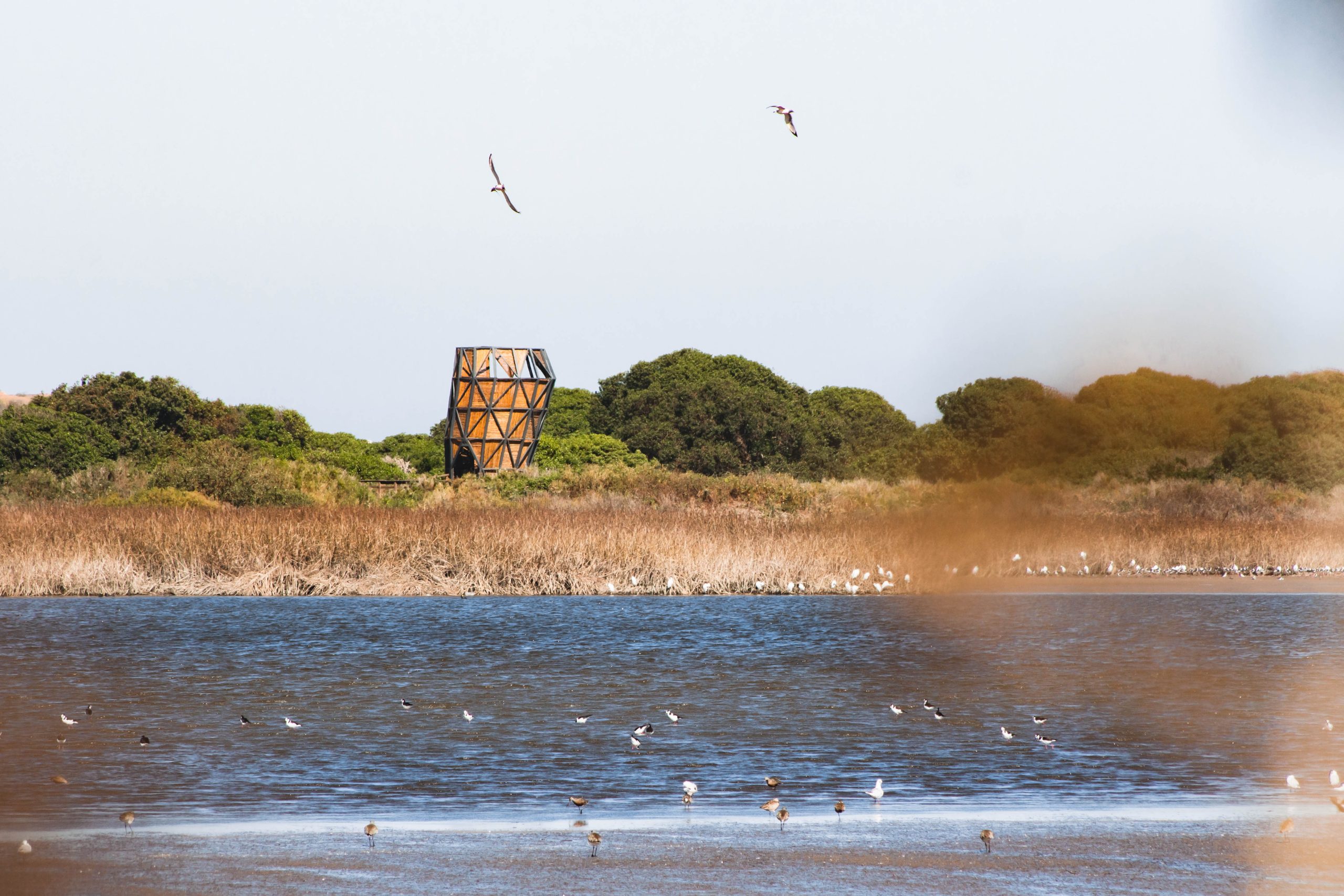
Shorebirds are among the species that travel the greatest distances during their migration. Some fly up to 30,000 km from the Arctic to Patagonia, and from Patagonia to the Arctic, stopping in breeding, feeding, and/or resting areas. Unfortunately, several scientific studies have shown that shorebird populations are declining, caused by, among other factors, the sustained loss and deterioration of their habitat. This, in turn, is caused by the traffic of four-wheel-drive vehicles on beaches and wetlands; the presence of off-leash dogs that disturb shorebirds, destroy their eggs, and/or eat their chicks; real estate development; and the trash—such as bags and plastic—we leave on beaches.
“Runaway dogs are one of the greatest threats to bird conservation, so people must practice responsible pet ownership,” said José Luis Brito, director of the San Antonio Natural History Museum, the entity responsible for the Maipo River Wetland’s nomination to WHSRN. In fact, according to data provided by Brito, in the Maipo River Wetland, between spring 2014 and early summer 2015 alone, dogs destroyed or ate almost all of the eggs of the birds that nested on the south bank of the river, especially queltehues, pilpilenes, and large mattress ducks.
“Shorebirds, and particularly some species along the Pacific Flyway, are declining globally, and if we don’t respond promptly, we could face species extinction in the short term. Coastal wetlands like the Maipo River must achieve national conservation status to protect the bird species they host, in agreement and coordination with all area users,” said Diego Luna Quevedo, WHSRN conservation specialist.
WHSRN is made up of a group of partners across the Americas, and its goal is to promote the conservation of shorebirds and the habitats critical to their survival by creating a network or system of key sites in their migration process. In total, it has 91 sites in 13 countries across the Americas, and a large number of partners that conserve and manage more than 13 million hectares of ecosystems vital to these birds.
“We hope that efforts continue to be combined, such as this declaration, to generate a culture of conservation and sustainable use of the HRM, since only in this way can we protect it from certain human activities that threaten it and, at the same time, promote its understanding and enjoyment,” concluded Diego Urrejola, executive director of the Cosmos Foundation and representative of the Mar Adentro Foundation, both entities collaborating with the Municipality of Santo Domingo in the consolidation of the Río Maipo Wetland Nature Park.