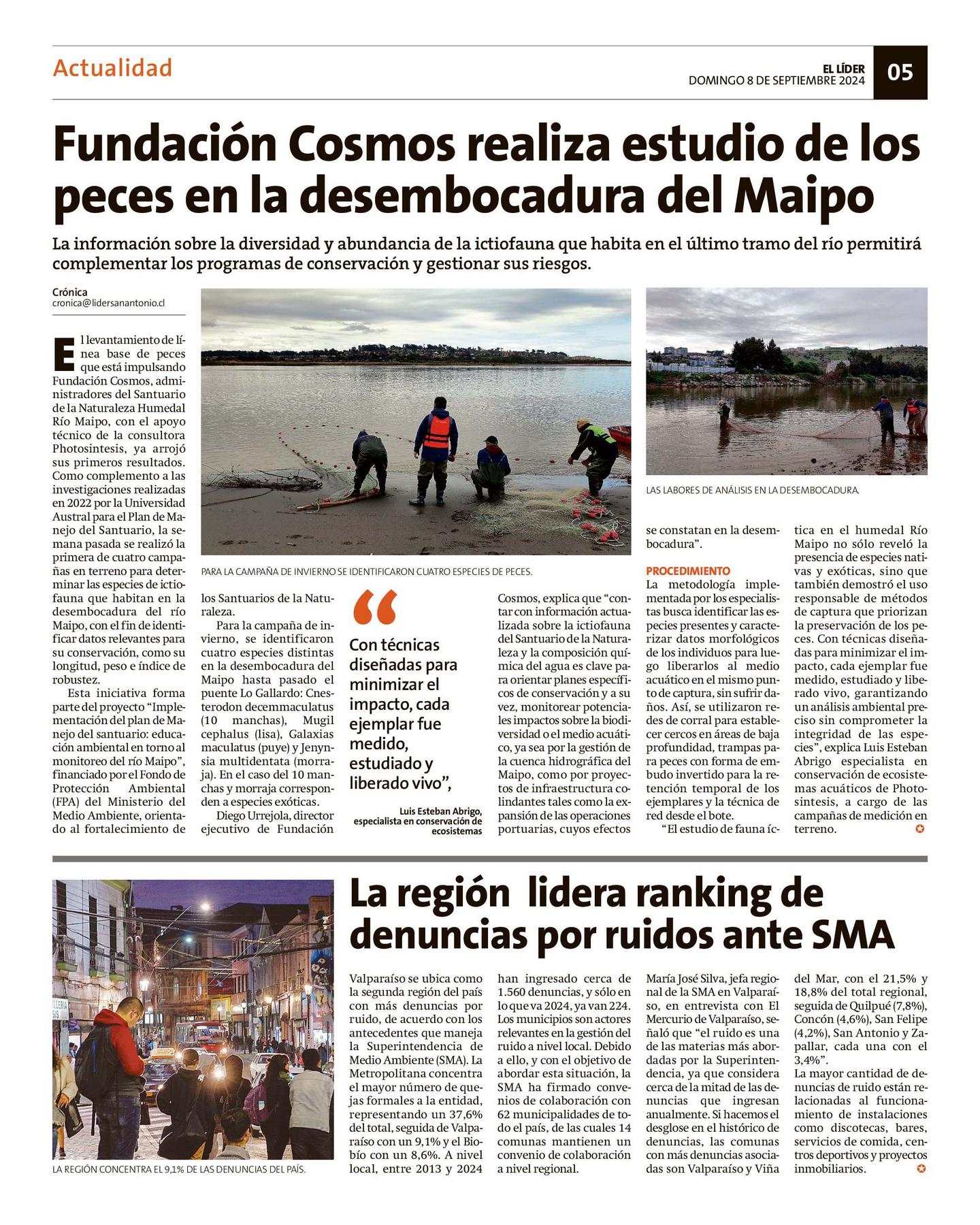
The Leader || Cosmos Foundation conducts a study of fish at the mouth of the Maipo River
- Publicado el 08.09.2024
- Escrito por Angel Fondon
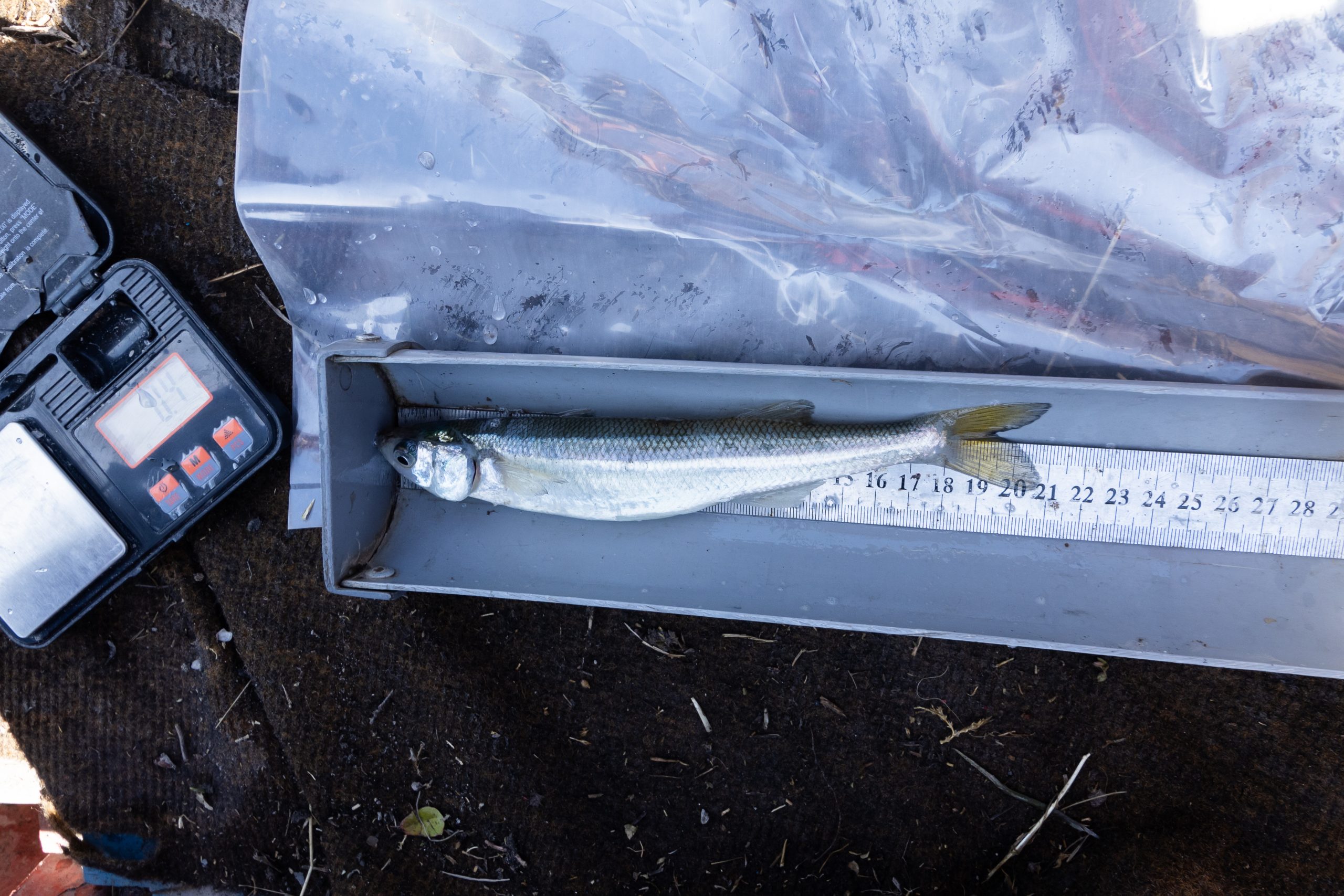
The baseline fish survey being promoted by the Cosmos Foundation, administrators of the Maipo River Wetland Nature Sanctuary, with technical support from the consulting firm Photosintesis, has already yielded its first results. As a complement to the research conducted in 2022 by the Universidad Austral for the Sanctuary’s Management Plan, the first of four field campaigns was conducted last week to determine the ichthyofauna species that inhabit the mouth of the Maipo River, with the aim of identifying data relevant to their conservation, such as their length, weight, and robustness index.
This initiative is part of the project “Implementation of the Sanctuary Management Plan: Environmental Education for Monitoring the Maipo River,” funded by the Environmental Protection Fund (FPA) of the Ministry of the Environment, which aims to strengthen Nature Sanctuaries.
For the winter campaign, four distinct species were identified from the mouth of the Maipo River up to the Lo Gallardo Bridge: Cnesterodon decemmaculatus (ten-spotted mullet), Mugil cephalus (mullet), Galaxias maculatus (puye), and Jenynsia multidentata (whitebait). The ten-spotted mullet and whitebait are exotic species.
Diego Urrejola, executive director of the Cosmos Foundation, explains that “having up-to-date information on the ichthyofauna of the Nature Sanctuary and the chemical composition of the water is key to guiding specific conservation plans and, in turn, monitoring potential impacts on biodiversity or the aquatic environment, whether due to the management of the Maipo watershed or due to adjacent infrastructure projects such as the expansion of port operations, the effects of which are evident at the estuary.”
Procedure
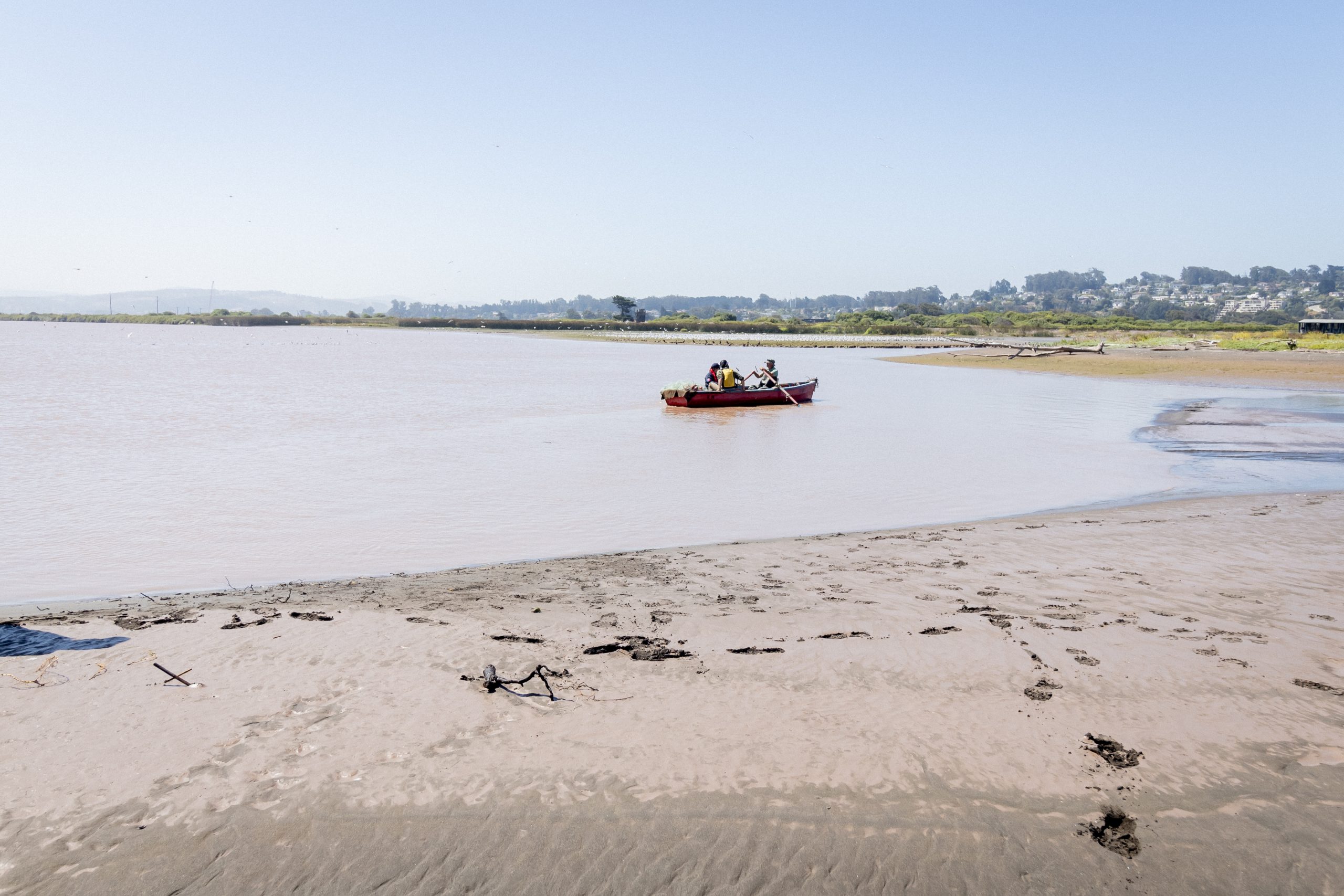
The methodology implemented by specialists seeks to identify the species present and characterize the morphological characteristics of the individuals, so they can then be released into the aquatic environment at the same point of capture, without being harmed. Thus, corral nets were used to establish fences in shallow areas, inverted funnel-shaped fish traps were used to temporarily retain the specimens, and the netting technique was used from the boat.
“The study of fish fauna in the Maipo River wetland not only revealed the presence of native and exotic species, but also demonstrated the responsible use of capture methods that prioritize fish preservation. Using techniques designed to minimize impact, each specimen was measured, studied, and released alive, ensuring a precise environmental analysis without compromising the integrity of the species,” explains Luis Esteban Abrigo, an aquatic ecosystem conservation specialist at Photosintesis, who is in charge of the field measurement campaigns.