
The Disconcerting | The future Las Salinas de Huentelauquén Wetland Park seeks to protect a Ramsar site and promote local development
- Published on 17.04.2026
- Written by Angel Fondon
The Cosmos Foundation leads the project that links conservation, sustainable tourism and environmental education around the largest wetland in the Coquimbo region.
See the article at eldesconcierto.cl
At the mouth of the Choapa River, in the Coquimbo Region, lie the more than 2,200 hectares of the Las Salinas de Huentelauquén wetland: the largest in the region and the thirteenth Ramsar site in Chile, recognized as a wetland of international importance since 2015. Here, working for sustainability is essential.
Until recently, this ecosystem lacked the infrastructure to receive visitors. Today, the Cosmos Foundation is working with the Huentelauquén Agricultural Community, the Municipality of Canela, and the Huentelauquén Estate to transform it into a sustainable tourism hub.
In an interview with El Desconcierto, Diego Urrejola, executive director of the foundation, explains the development and scope of the future Las Salinas de Huentelauquén Wetland Park, located in the municipality of Canela. The project—which combines conservation, sustainable tourism, and environmental education—is progressing in its first stage: the Explanada de las Aguas (Water Esplanade), a space conceived as ‘a true open-air museum’ currently under construction.
A development hub in a lagging area
-What is the infrastructure project for the conservation and enhancement of the Las Salinas de Huentelauquén Ramsar site about?
This is a comprehensive planning process for the Ramsar site that we are developing together with the community, with the aim of projecting it as a hub for local development based on sustainable tourism, conservation and environmental education in a lagging area like the commune of Canela.
The initiative seeks to highlight the natural and cultural value of the Salinas de Huentelauquén wetland, activate development opportunities for the region, and simultaneously generate concrete conservation actions that ensure its long-term protection. Within this framework, the project aims to regulate the relationship between people and the area, promoting responsible public use linked to ecosystem care and environmental education.
To achieve this, we have worked in partnership with public and private actors, such as the Municipality of Canela, the Chilean Network of Bird and Wildlife Observers (ROC), the Huentelauquén Estate and the Agricultural Community -owner and administrator of the Ramsar site- integrating local knowledge and the way of inhabiting the territory in the design of the proposal.
Regarding the infrastructure we are developing, such as the esplanade, viewpoints, and interpretation spaces, it fulfills an enabling role: it allows us to channel access, strengthen the educational experience, and safeguard the natural dynamics of the wetland, as part of a management model oriented towards its sustainability.
The Esplanade of the Waters: ‘an open-air museum’
-What does the first stage, called Explanada de las Aguas, which is already under construction, consist of?
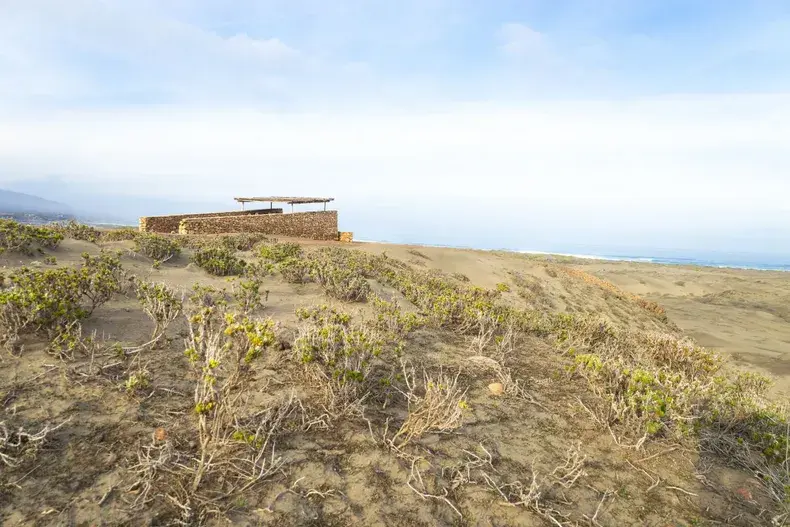
The Explanada de las Aguas, currently under construction, is a true open-air museum that connects viewpoints, pedestrian walkways and rest areas, allowing visitors to observe the different ecosystems that coexist in this place from a privileged position through four viewpoints that project towards: the mountain range, the sea, the river and the seasonal lagoons.
More than a point of passage, we envision it as a civic space that invites you to stop, to look more closely and begin to understand the complexity of the territory.
The design of the esplanade emerged from a participatory process with the community, incorporating their vision of the territory. The inspiration for its distinctive shape comes from the lithics, an archaeological remnant of the Huentelauquén Complex used for ceremonial and ritual purposes, while its name alludes to the origin of the word Huentelauquén, which in Mapudungun (huente-lafken) means “on the waters.”
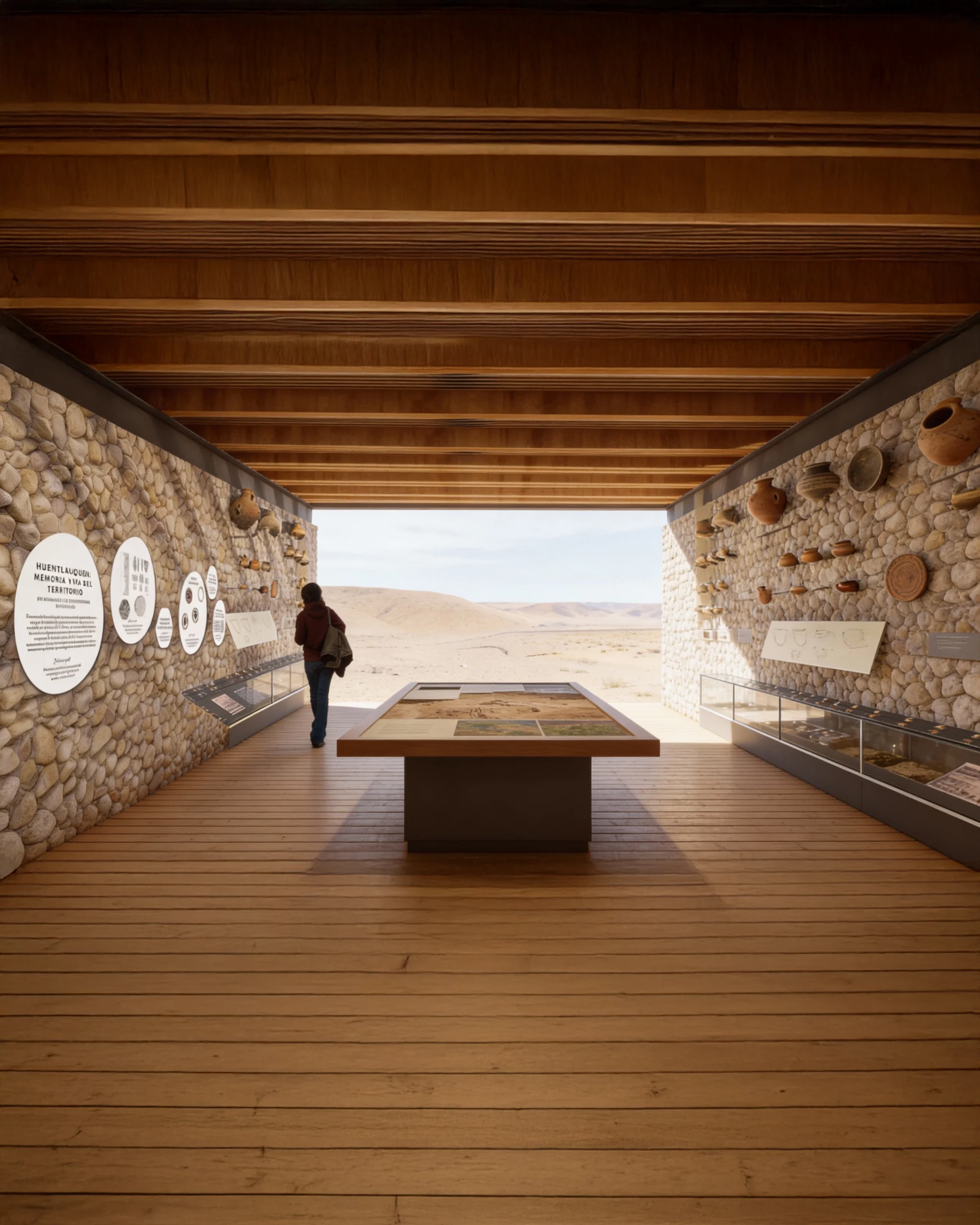
In turn, we draw on vernacular architecture to blend the infrastructure with the landscape and not impose it upon it, using local techniques and materials such as stone walls, reeds and wood.
Sustainable tourism with local roots
-How do you seek to position the Canela commune as a hub for sustainable tourism?
We believe that to achieve this positioning goal, the first step is to develop a proposal that clearly reflects its territory, that is, one that highlights Canela’s biocultural heritage. This means developing an offering that doesn’t rely on large-scale interventions, but rather builds upon what already exists: its landscape, its biodiversity, and its local culture.
By enabling visitors to experience the ancestral culture of this town in an immersive way, through the experience of walking, touching, and feeling, it undoubtedly sets a differentiating attribute for projecting the town as a hub of interest for sustainable tourism.
However, if we want the use of this space to be sustainable over time, we must have a management model to ensure that the Wetland Park effectively integrates the conservation of its biodiversity and ecosystem functions with the development of sustainable tourism in the area. To this end, we are working on a model with the Olivo Foundation to guide decision-making, administration, and the park’s future planning.
-Can you tell us more about the next stages: the museum tour and the biocultural interpretation center?
The museum trail is a 5-kilometer circuit within the park, stretching from the entrance to the Ramsar site to the water feature, allowing visitors to gradually understand the territory and its components as they walk. Through various interpretive points and interactive signage, information is revealed about the wetland’s biodiversity, its natural processes, and its history, fostering a deeper understanding of the landscape. The goal is for those who visit the wetland to return home knowing why it is important to protect these ecosystems and why they are key to the resilience of the surrounding communities.
On the other hand, the Biocultural Interpretation Center is a welcoming space for visitors, providing a framework for understanding what they are about to explore. It addresses both the ecological value of the wetland and its cultural dimension, linked to the history of Huentelauquén’s culture and the practices of local communities.
Both elements are designed to make the visit not only a visual experience, but also an opportunity for understanding and reflection. Currently, this phase is seeking funding to further its development and implementation, and the project as a whole is covered by the Law of Cultural Donations.
Sustainability and conservation as the driving force of the territory
-Do you believe that conservation can be a driver of local development in the Coquimbo region, and how does this benefit the communities?
We are convinced that conservation is a driver of local development, insofar as it is built from the ground up and with the communities. In this case, the project we are developing is functional for reconnecting people with nature in a mutually beneficial relationship, where the care of the wetland also enables opportunities, such as local development as a tourist destination, which in turn stimulates many other associated industries, such as the food service, hotel, and local SMEs sectors, among others.
Conservation, in this context, is a way to integrate this valuable ecosystem into the development structure and projection of Canela towards the future, without detaching it from its roots and culture.