
Nature education: the key to achieving sustainable development
- Publicado el 15.05.2018
- Escrito por Angel Fondon
This week we published an opinion column on Ladera Sur —an online platform/portal on the environment, landscapes, outdoor life, travel, and more—in which we share our perspective on nature education and its importance on the path toward sustainable development.
Nature education: the key to achieving sustainable development
Annelore Hoffens, Director of Communications at the Cosmos Foundation, shares an interesting opinion piece on the role of education in sustainable development and how it is increasingly necessary and relevant for this learning to take place in nature.
The environmental and social problems facing the world in the 21st century pose significant challenges for countries to advance toward a sustainable future, as the UN seeks through its 2030 Agenda for Sustainable Development Goals (SDGs). This Agenda calls for action to end poverty, protect the planet, and ensure that all people enjoy peace and prosperity.
Challenges of this magnitude undoubtedly require a transformation of the values that typically govern the relationship between people and nature, human interaction and communication, and the production and consumption patterns we currently have as a society. In other words, it requires a change in people’s awareness and lifestyle, which requires the development and implementation of a new form of education:
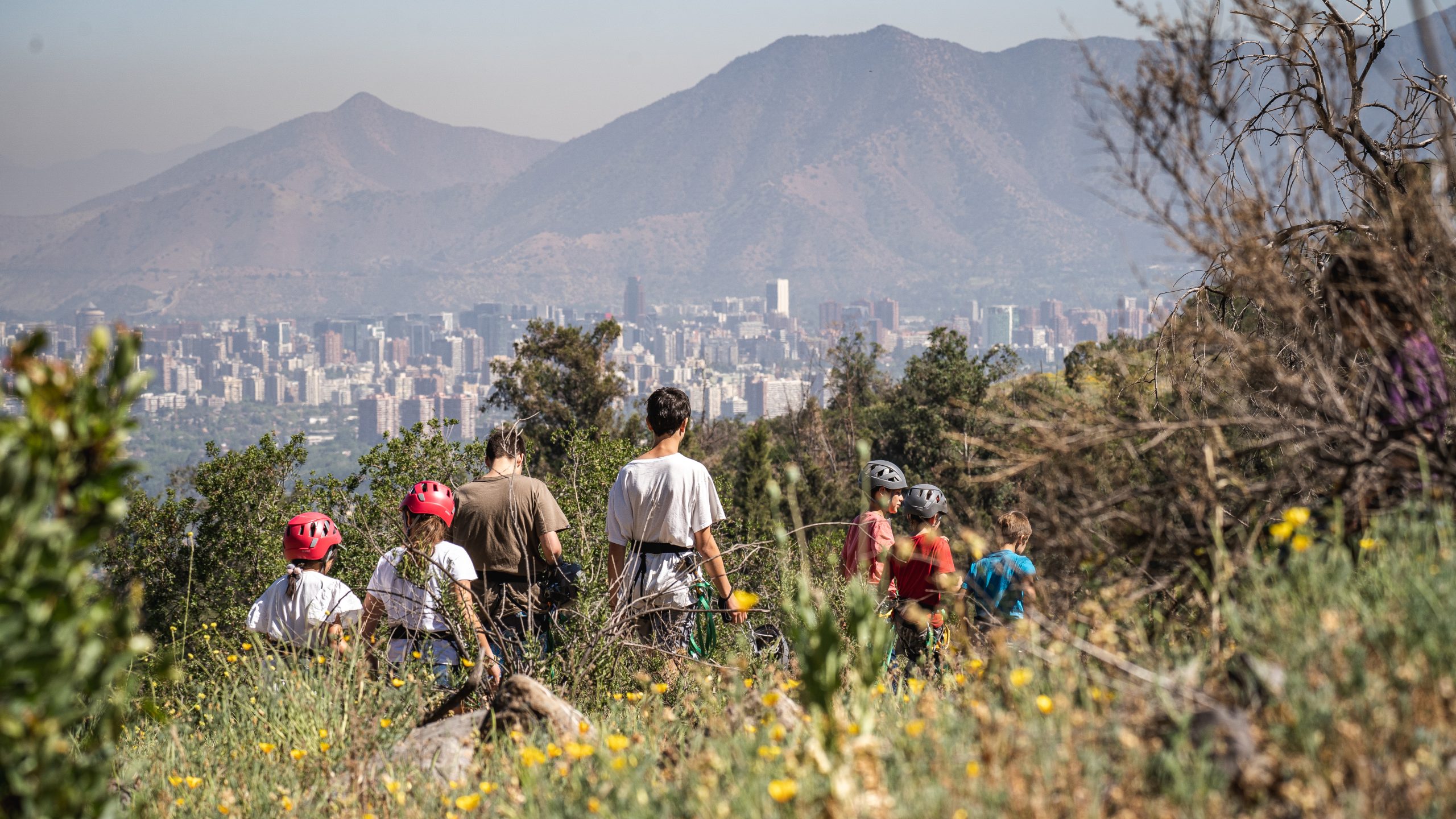
Education for Sustainable Development aims to develop a new ethic that embraces all living beings , enabling human societies to live in harmony with nature, upon which they depend for their survival and well-being. It seeks to strengthen the knowledge, skills, and attitudes that enable children, adolescents, young adults, and adults to reflect and make informed decisions and act in their respective contexts—be it family, school, neighborhood, community, city, or country—as citizens committed to solving social, economic, cultural, and environmental problems.
Among its principles, ESD emphasizes the importance of outdoor education, because it is there, in nature, that the ideal setting for developing such knowledge and skills exists. We refer to the ability to work collaboratively, to build community; to develop Earth-centered leadership, critical and systemic thinking; and to strengthen respect and appreciation for diversity in all its aspects. Furthermore, it is in nature that the relationships and interconnections between natural and social systems are best understood, and the importance of sociocultural factors in the origin of environmental problems is most clearly understood.
It’s no coincidence, in fact, that in many developed countries, the trend in schools is to spend increasing amounts of time outdoors, in nature, playing and deeply observing its details and processes, to learn math, language, science, art, and so on; to identify and reflect on the ecological footprints our development model has left there, and to strengthen values and behaviors aimed at reversing them. It’s about connecting students with nature from a cognitive and emotional perspective, so that they are able to see and understand it holistically.
A group of children who, finding themselves in the middle of a forest, must build a shelter using the elements nature offers (without destroying it), must not only be able to organize themselves and work as a team to achieve their goal, or collaborate to solve problems that may arise along the way, but they must also open their eyes—and other senses—to explore their surroundings with a different perspective, looking for branches, trunks, rocks, and leaves that they otherwise wouldn’t have seen. Or they will have to stop for a moment to think about how animals build their shelters with exactly the same materials they have at their disposal, with such precision and technique that perhaps the best option is to learn from them and imitate them.
Children sitting blindfolded on grass, dirt, or sand, holding an object from wherever they are and playing a guessing game about what it is, what function it serves in the ecosystem, and how it interacts with other natural elements, will be stimulating systemic thinking and awareness of the interconnectedness of all natural elements.
Exercises like these are common in kindergartens and schools in countries like Norway, Germany, and Canada, to name a few, and are carried out in both cold and hot weather, because experiencing the same place in different seasons is also essential for understanding and becoming aware of how the planet works.
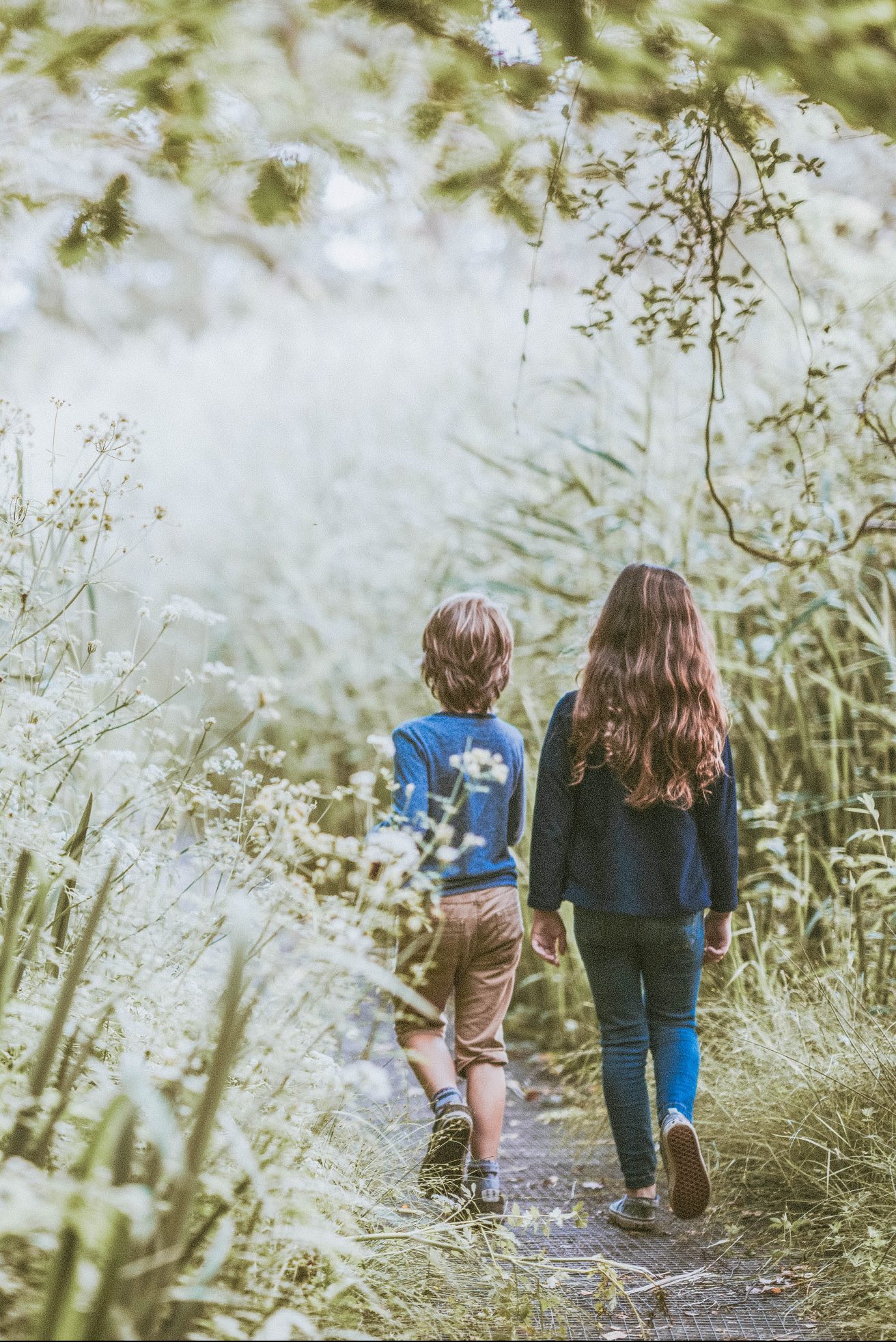
But Nature Education is not limited to school education; it should be available to all age groups, for example, through Environmental Education Centers that offer activities or exercises to make us aware of things we rarely stop to think about: the interaction of each element of an ecosystem with other elements; of a small ecosystem with larger ones; and of ourselves with all of this. Being aware of these relationships and interconnections changes our perception and appreciation of nature, and the role we ourselves play in it, as part of it.
After adopting the commitment to work on Education for Sustainable Development, Chile developed and published its National Policy on Education for Sustainable Development (PNEDS) in April 2009. This policy is understood as a space for governmental and non-governmental coordination to propose and analyze various educational recommendations and changes that, in turn, must be translated into the changes in habits and behaviors required to advance toward sustainability. Therefore, the State should vigorously promote the practice of nature education, starting by encouraging educational institutions to spend more time outside the classroom, after developing pedagogical guides and training teachers so that they know that, by educating in nature, they are not only not wasting time relative to their curricular goals, but are also further enhancing the learning and development process of their students.
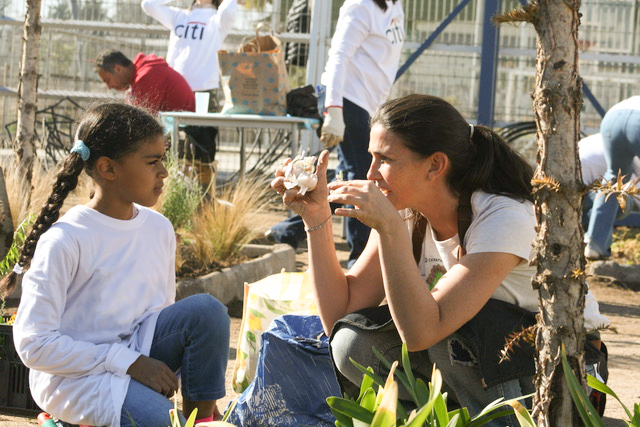
If ESD, as stated, promotes the acquisition of knowledge, skills, attitudes, and values by every human being to forge a sustainable future, nature must play a fundamental role as a platform for education, because it contains everything we need to learn to move toward a sustainable future.