
Integrated water management: the path to regeneration
- Publicado el 11.04.2023
- Escrito por Angel Fondon
By Claudio Orrego and Diego Urrejola
The work of the sponsoring group to shape the future Basin Council seeks to provide an innovative, institutional solution to the problem we face, integrating all legitimate interests linked to water use based on principles of social, environmental, and economic equity, ensuring that every water user will have rational and sufficient access to water. In this way, drop by drop, we can enable the regeneration of watersheds and restore the fragile water cycle for the sustainability of a socio-ecosystem that cries out for us to organize to defend it, paradoxically, from our own indifference.
Chile is currently experiencing its longest megadrought in at least a thousand years, placing our country at the forefront of the water crisis in Latin America. This sad reality documented by the World Meteorological Organization does not seem to shock us as a society. Perhaps the 14 years of drought we are experiencing in 2022 have led us to normalize a phenomenon for which, as humanity, we are largely responsible.
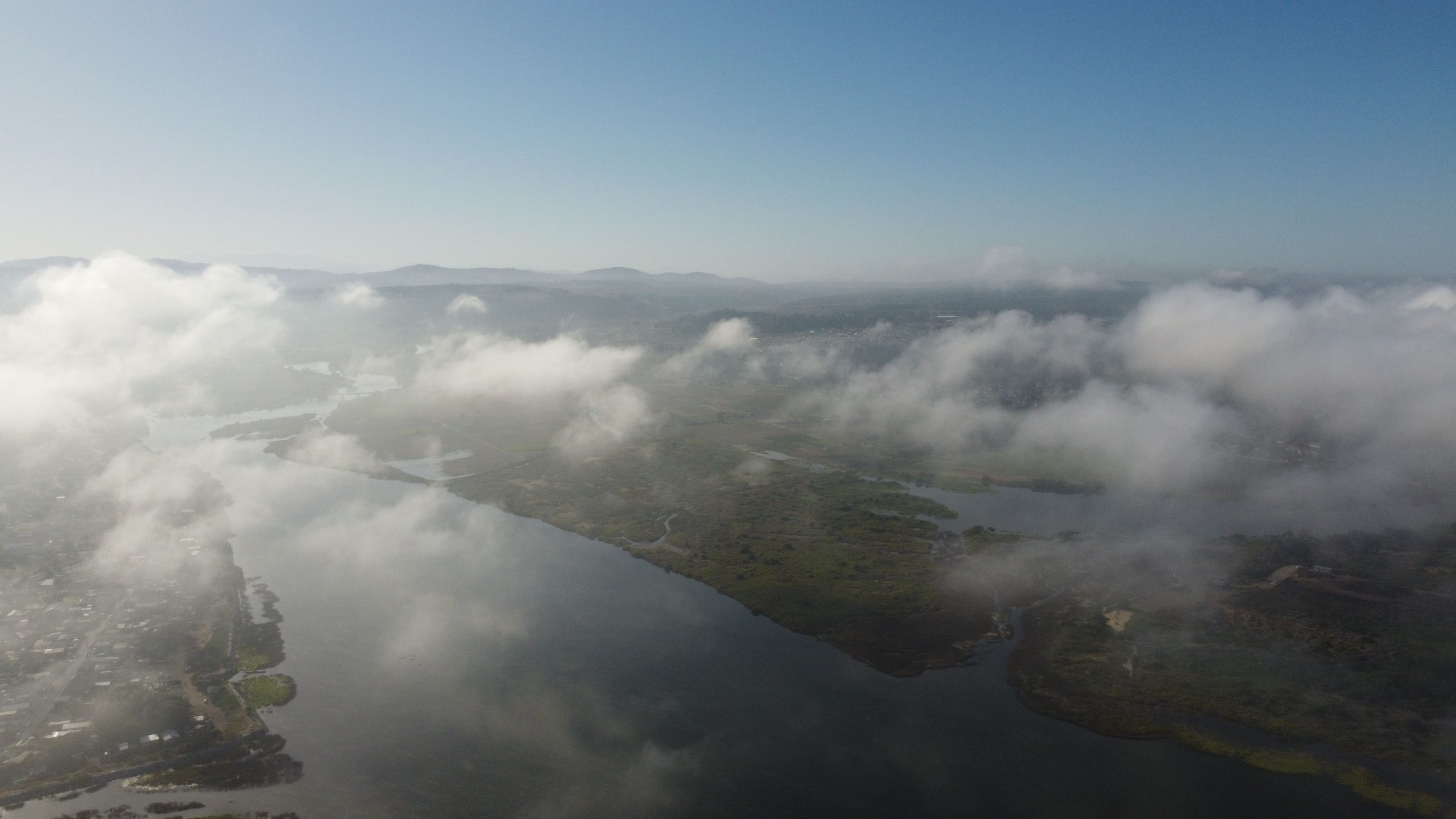
The problem we face does not distinguish political-administrative borders. The Maipo River basin is being subjected to unsustainable stress that will hit us head-on sooner or later. We already saw worrying signs in January with the silting of the Maipo River at its mouth in the province of San Antonio, which shows us that indifference and fragmented management upstream have consequences downstream.
It should not be forgotten that the Maipo River basin extends far beyond the capital’s boundaries. While water continues to flow into thousands of homes, we are unaware that, just a few kilometers away, families must extract water from ever deeper wells and increasingly rely on tanker trucks for their water. The risk of rationing is latent, and it’s up to us to prevent it from becoming a reality. However, we are concerned about how many political actors are trying to ease tensions regarding this issue.
The triple environmental crisis we are experiencing—climate change, pollution, and biodiversity loss—is a long-term struggle that requires cultural change and the modernization of our institutions. This takes time, but that’s exactly what we’re running out of. That’s why, in parallel with this long-term race, we must think about the present, about being resilient and having the ability to adapt to present and future changes, which necessarily requires the integration of different perspectives and all users of the water element.
Given this urgent need, in addition to establishing new governance around sustainable water use, the Santiago government is moving forward with solutions. This year, it will implement 30 Local Water Strategies, public-private agreements, the first regional water management regulation, and the design of at least 30 water solutions, as well as pilot projects in various areas of the region.
Within this framework, in conjunction with the Chile Foundation’s Water Scenarios program, and with the participation of various civil society organizations and representatives from diverse sectors, we are working on the formation of a promotional group that will lay the foundations for the creation of a Basin Council, an organization that will ensure efficient water management that will allow us—in a scenario of climate change and water scarcity—to adapt use to current water availability and meet the needs of water users with a systemic and comprehensive perspective.
The work of the sponsoring group to shape the future Basin Council seeks to provide an innovative, institutional solution to the problem we face, integrating all legitimate interests linked to water use based on principles of social, environmental, and economic equity, ensuring that every water user will have rational and sufficient access to water. In this way, drop by drop, we can enable the regeneration of watersheds and restore the fragile water cycle for the sustainability of a socio-ecosystem that cries out for us to organize to defend it, paradoxically, from our own indifference.