
El Mostrador || Maipo River Wetland: Basic Questions About the Port Megaproject
- Publicado el 05.05.2024
- Escrito por Angel Fondon
Why was it decided to build on the Maipo River estuary, just meters away from an ecosystem of hemispheric importance? What feasibility studies support this as the best option compared to other alternatives? So far, there’s no answer.
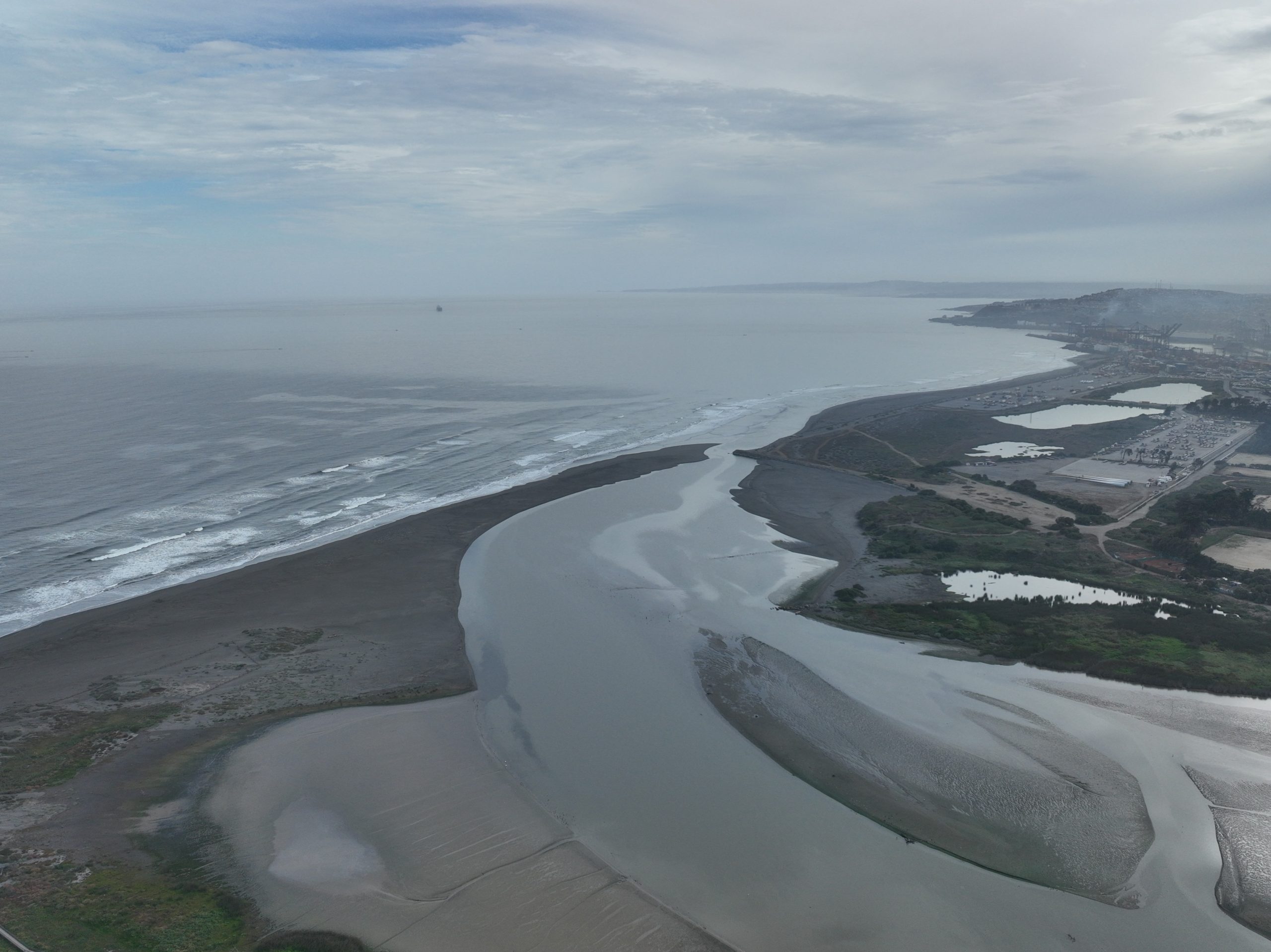
Since April 2020, the San Antonio Outer Port project has been under environmental assessment. It will be located just meters from the Maipo River Wetland Nature Sanctuary, a protected natural heritage area of the San Antonio Province, managed by the Cosmos Foundation. For a project of this magnitude, which will evidently have social and environmental impacts, it is expected that decisions will be explained clearly, in a timely manner, and with all the background information presented. And this expectation of minimum transparency becomes relevant after receiving a historic number of technical observations from organizations with environmental jurisdiction and the public. At the Cosmos Foundation, as administrators of the Maipo River Wetland Nature Sanctuary, we are convinced that the “Outer Port” project, as designed and submitted to the Environmental Impact Assessment System (SEIA), represents a significant threat to the Sanctuary and the entire ecosystem of the region. Along these lines, the consensus among technical experts and conservation managers is that the project’s main impact on the ecosystem will be due to the Molo de Abrigo (Shelter Moor), an infrastructure whose location the project owner has not publicly justified, despite repeated requests for information from 2015 to the present. Nor has it clarified what other alternatives were evaluated and why they were not considered. This lack of information regarding the reasons for the current design leaves us with a legitimate doubt about whether only economic considerations—associated with lower construction costs—were prioritized over environmental considerations. Why was it decided to build on the Maipo River estuary, meters away from an ecosystem of hemispheric importance? What feasibility studies support this as the best option compared to other alternatives? So far, there is no answer. At the Cosmos Foundation, we understand the advisory role of the Outer Port Advisory Council, mandated by the Ministry of Transport and Telecommunications to enable the development of the project and integrate diverse perspectives for its improvement. In this regard, and drawing on the extensive experience and expertise of the Council members, we express our concern about the course the project has taken during its environmental processing. The current climate of national concern over the consequences of permitting deadlines and the geopolitical importance of the port may be conducive to fast-track approval, without the proper studies and mitigations of the environmental impact of a project with deficiencies at its origin. On December 31, 2024, the suspension of the deadline for the evaluation procedure for the Environmental Impact Study of the project, requested by the EPSA in March 2023 to respond to the observations contained in the Consolidated Report of Requests for Clarifications, Rectifications, and Extensions (ICSARA), will be lifted. And while EPSA is conducting international tours to finance the construction of the Molo de Abrigo—assuming ex ante that the environmental institutions will favorably evaluate the project and grant it the Environmental Qualification Resolution (RCA)—those who will suffer the consequences of a poorly designed project continue to have basic questions answered. That’s why we’re asking the Outer Port Advisory Council to take an active role in providing greater transparency to the project and for EPSA to publicly assume the consequences of its decisions on socio-ecosystems.