El Mostrador | Community plants native species to restore degraded hectares of the Maipo River Wetland
- Publicado el 29.11.2023
- Escrito por Angel Fondon
The plantation is one of the components of the Maipo River Wetland Socioecological Restoration Program, which seeks to recover three degraded hectares of the ecosystem with the community.
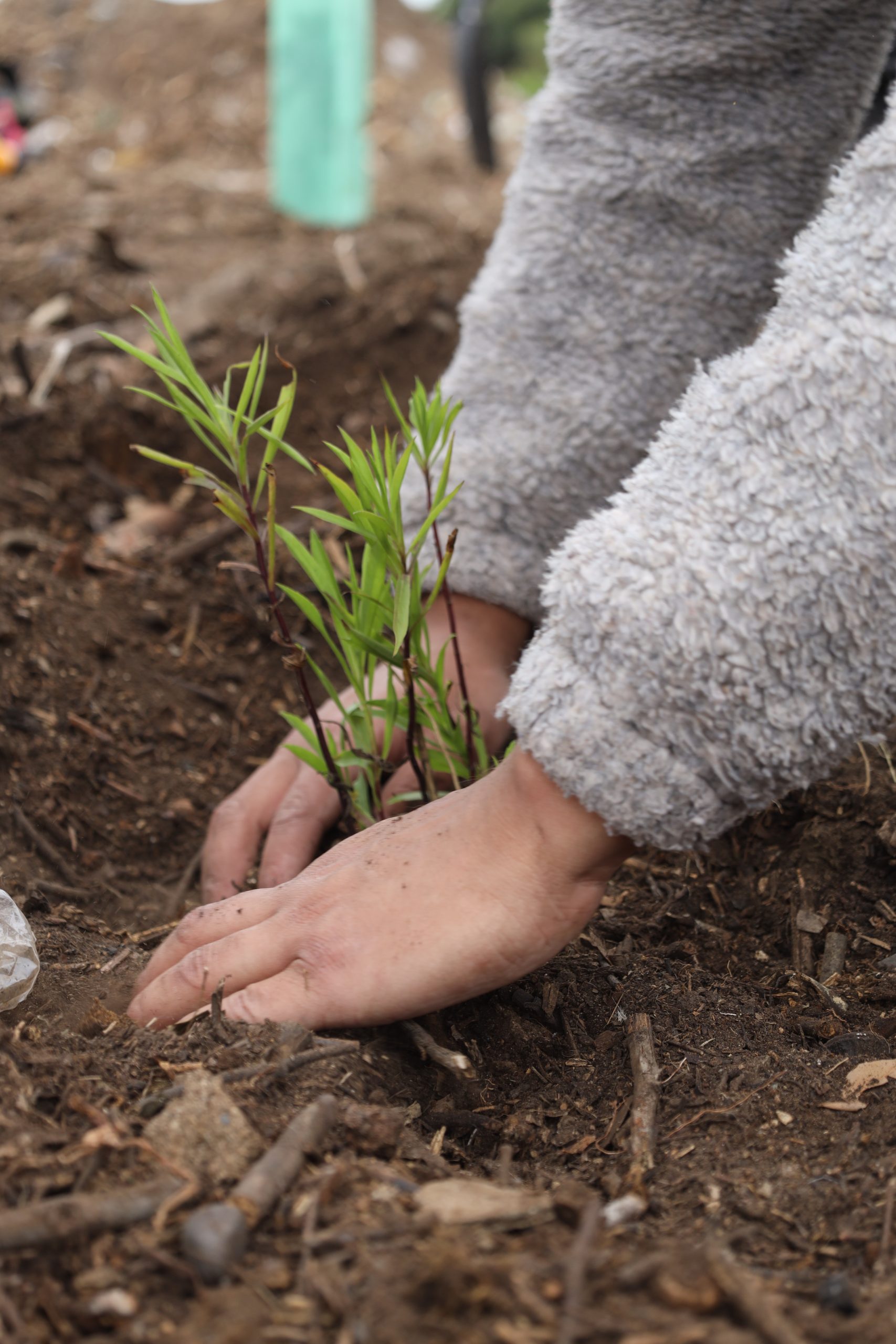
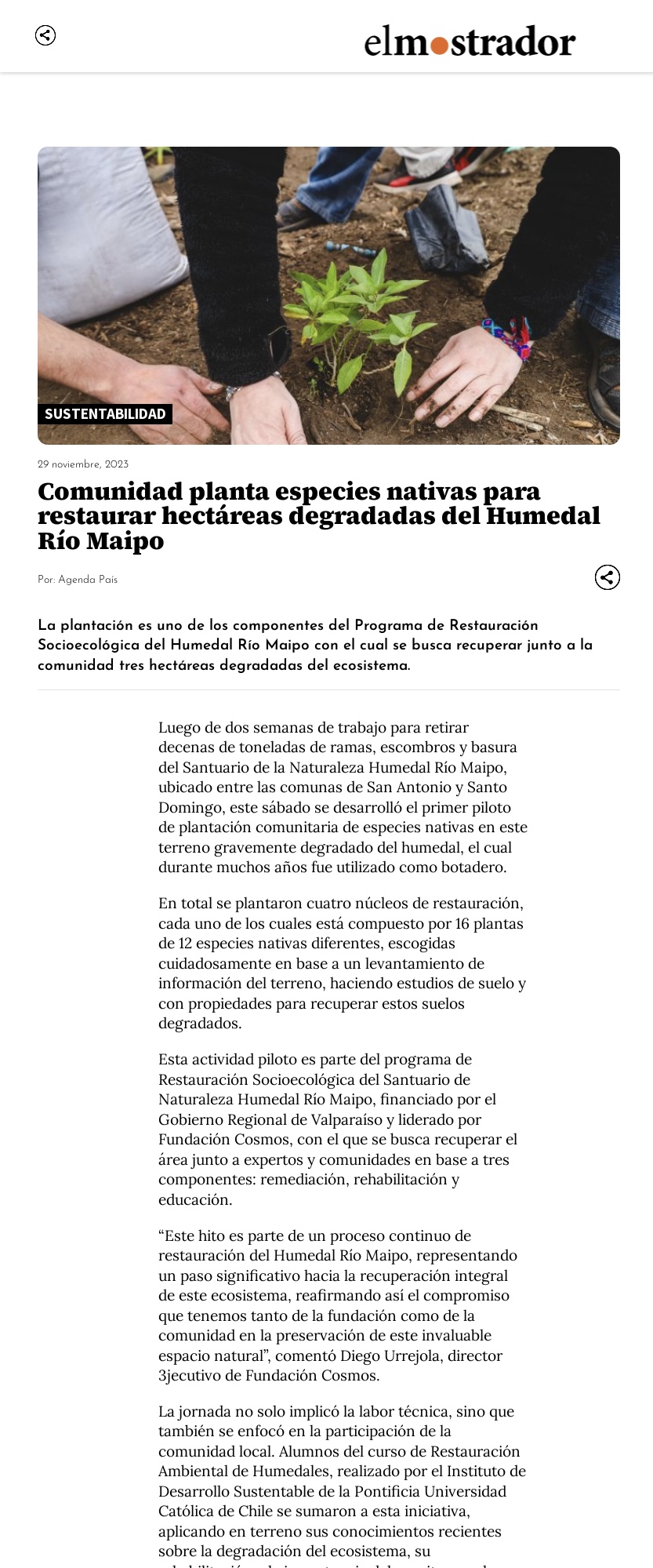
After two weeks of work removing dozens of tons of branches, debris, and trash from the Maipo River Wetland Nature Sanctuary, located between the municipalities of San Antonio and Santo Domingo, the first pilot community planting of native species took place this Saturday in this severely degraded wetland area, which had been used as a landfill for many years. A total of four restoration centers were planted, each composed of 16 plants of 12 different native species, carefully chosen based on field information, soil studies, and properties to restore these degraded soils. This pilot activity is part of the Socioecological Restoration Program of the Maipo River Wetland Nature Sanctuary, funded by the Regional Government of Valparaíso and led by the Cosmos Foundation. The program seeks to restore the area in collaboration with experts and communities based on three components: remediation, rehabilitation, and education. “This milestone is part of an ongoing restoration process for the Maipo River Wetland, representing a significant step toward the comprehensive recovery of this ecosystem, thus reaffirming the commitment of both the Foundation and the community to the preservation of this invaluable natural space,” commented Diego Urrejola, Executive Director of the Cosmos Foundation. The event not only involved technical work but also focused on the participation of the local community. Students from the Wetland Environmental Restoration course, offered by the Institute for Sustainable Development at the Pontifical Catholic University of Chile, joined this initiative, applying their recent knowledge of ecosystem degradation, its rehabilitation, and the importance of long-term monitoring for the conservation of these environments. The Foundation explains that after planting these specific areas, soil behavior and the restorative effect of the plants will be monitored for six months to review the results and move forward with the final planting of the three hectares to be restored.