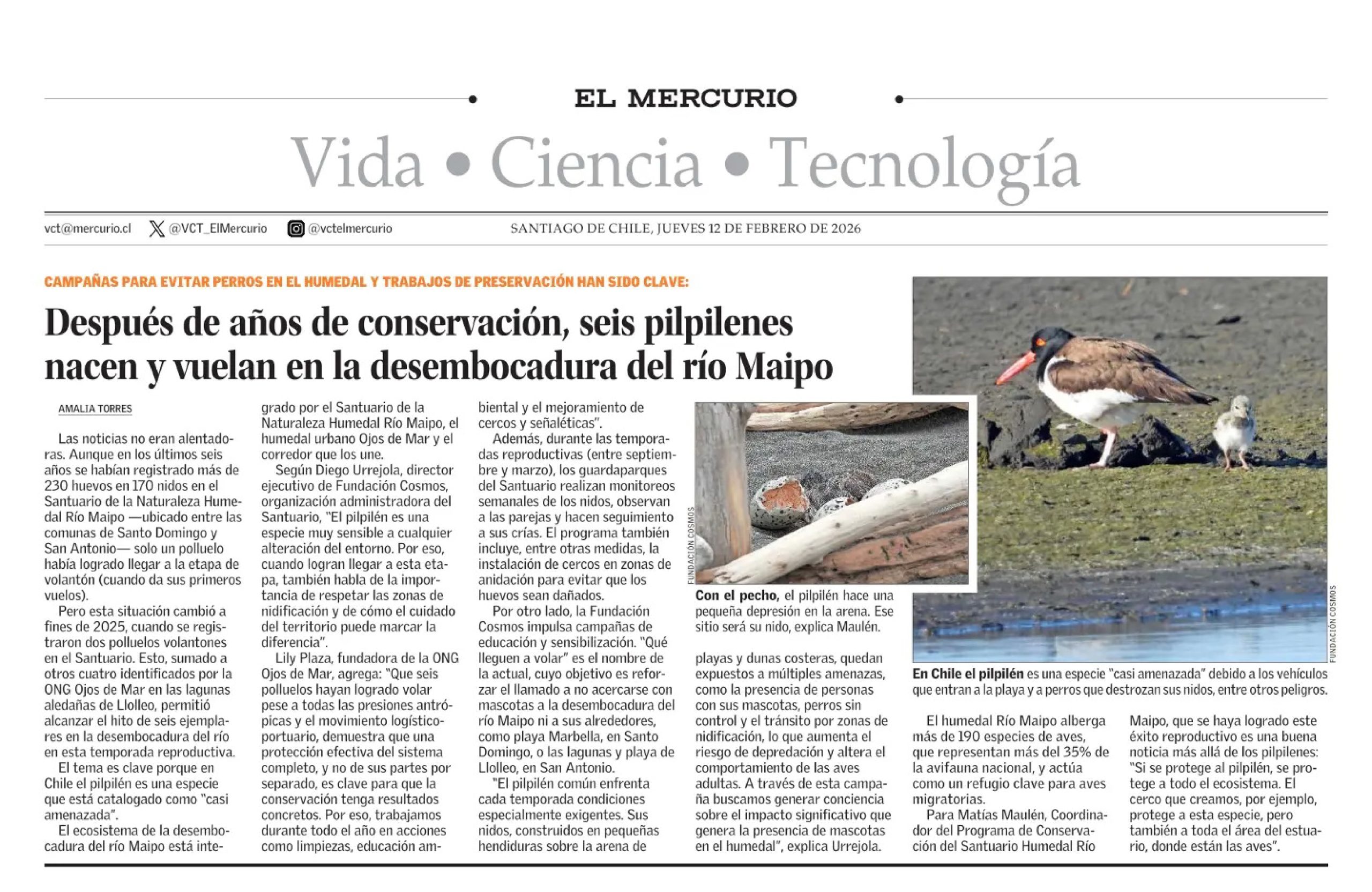
El Mercurio | After years of conservation, six oystercatchers are born and fly at the mouth of the Maipo River
- Publicado el 12.02.2026
- Escrito por Angel Fondon
The news was not encouraging. Although in the last six years more than 230 eggs had been recorded in 170 nests in the Río Maipo Wetland Nature Sanctuary —located between the municipalities of Santo Domingo and San Antonio— only one chick had managed to reach the fledgling stage (when it takes its first flights).
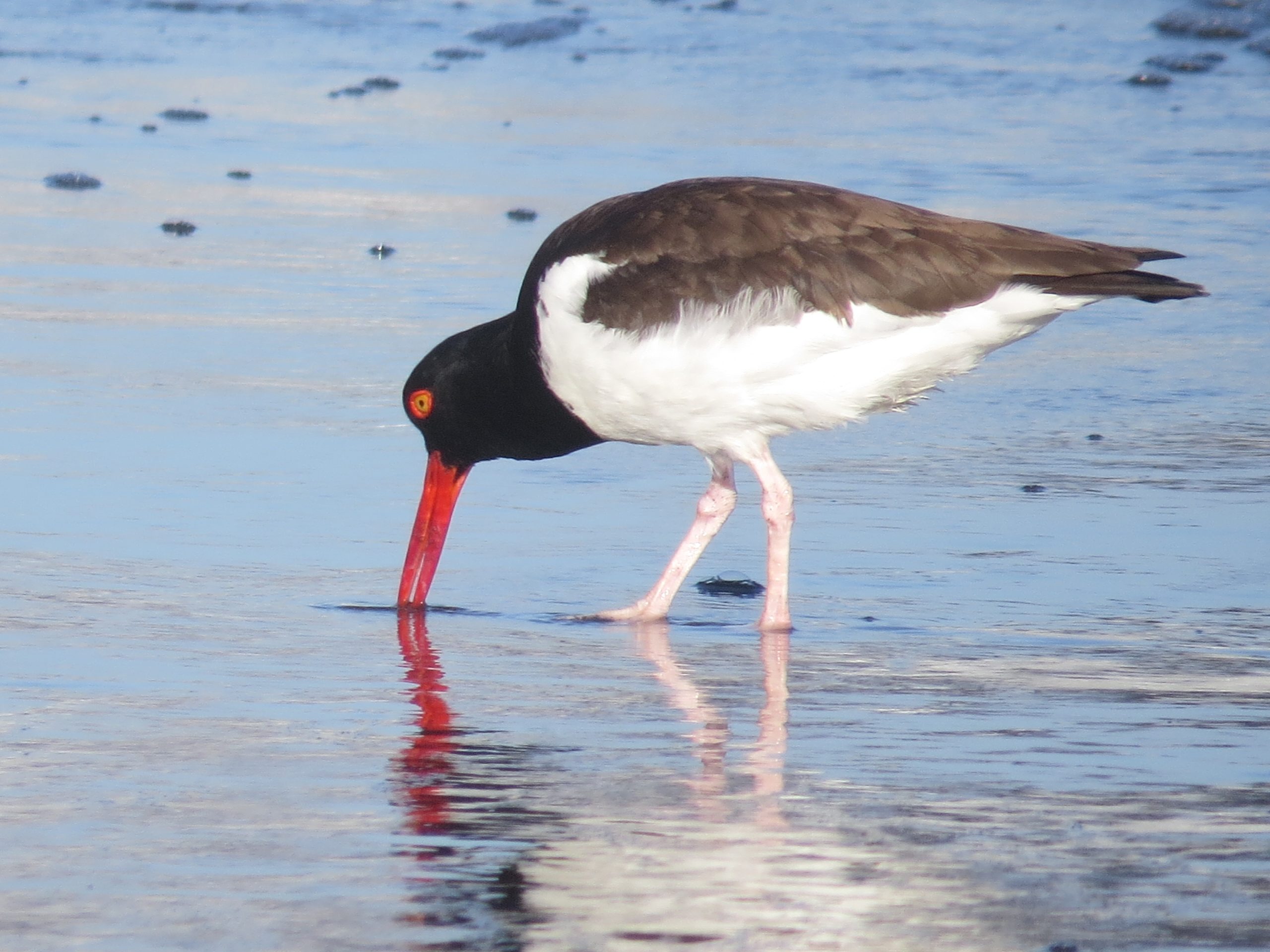
But this situation changed at the end of 2025, when two fledglings were recorded at the Sanctuary. This, along with four others identified by the NGO Ojos de Mar in the nearby lagoons of Llolleo, allowed them to reach the milestone of six specimens at the river mouth during this breeding season.
The issue is key because in Chile the pilpilén is a species that is listed as ‘ near threatened’.
The ecosystem of the Maipo River estuary is made up of the Maipo River Wetland Nature Sanctuary, the Ojos de Mar urban wetland and the corridor that connects them.
According to Diego Urrejola , executive director of Fundación Cosmos, the organization that manages the Sanctuary, ‘The oystercatcher is a species very sensitive to any alteration of its environment. Therefore, when they manage to reach this stage, it also speaks to the importance of respecting nesting areas and how caring for the territory can make a difference.’
Lily Plaza, founder of the NGO Ojos de Mar, adds: ‘The fact that six chicks managed to fly despite all the human pressures and the logistical and port activity demonstrates that effective protection of the entire system, and not just its parts separately, is key for conservation to have concrete results. That’s why we work year-round on actions such as cleanups, environmental education, and improving fences and signage.’
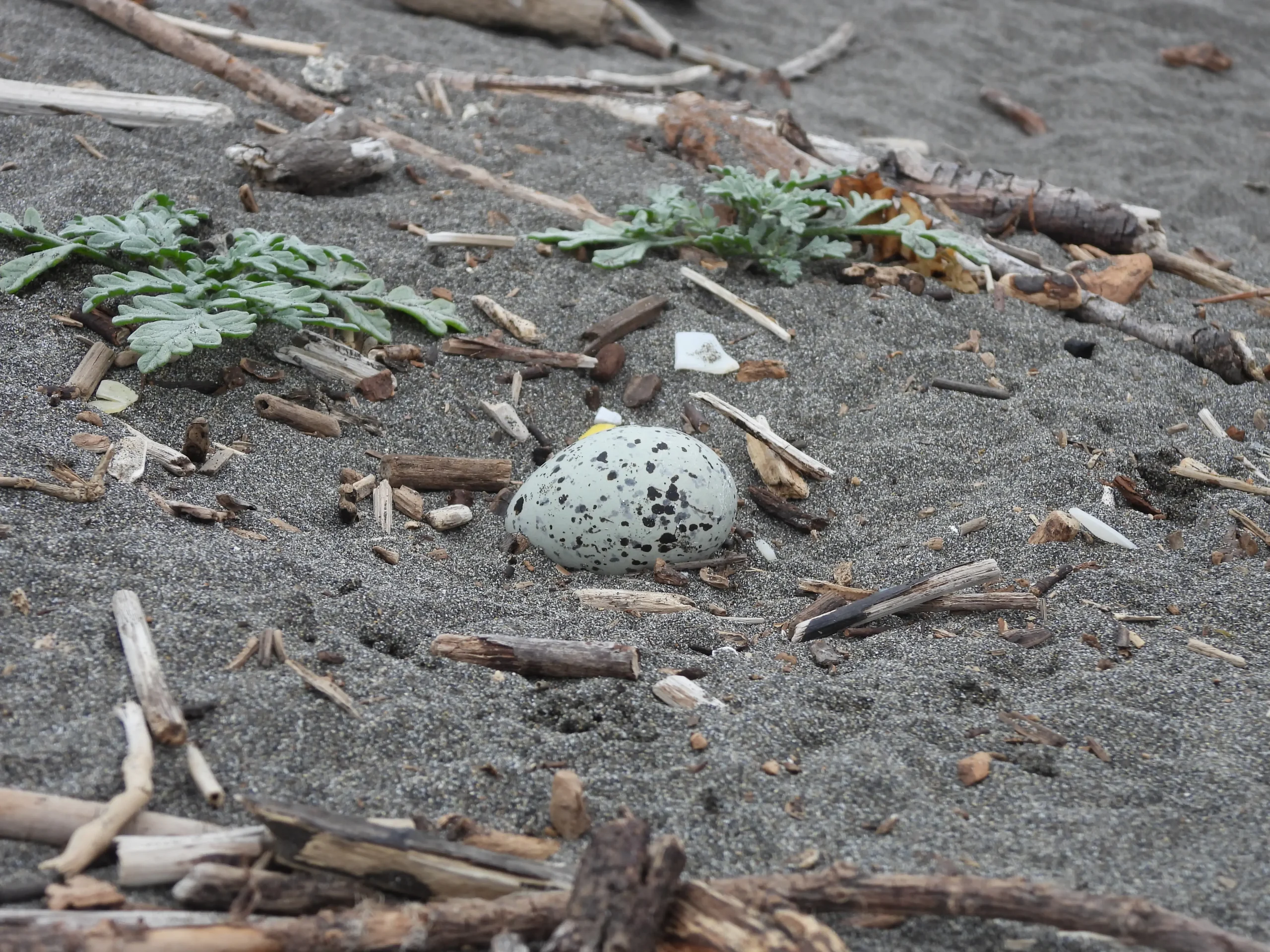

In addition, during the breeding season (between September and March), the Sanctuary’s park rangers conduct weekly monitoring of the nests, observe the pairs, and track their chicks. The program also includes, among other measures, the installation of fences in nesting areas to prevent damage to the eggs.
On the other hand, the Cosmos Foundation promotes education and awareness campaigns. The current campaign, titled “Let Them Fly,” aims to reinforce the call to keep pets away from the mouth of the Maipo River and its surrounding areas, such as Marbella Beach in Santo Domingo, or the lagoons and beach of Llolleo in San Antonio.
‘The common oystercatcher faces particularly demanding conditions each season. Its nests, built in small crevices in the sand of beaches and coastal dunes, are exposed to multiple threats, such as the presence of people with their pets, uncontrolled dogs, and traffic through nesting areas, which increases the risk of predation and alters the behavior of adult birds. Through this campaign, we seek to raise awareness about the significant impact that the presence of pets has on the wetland,’ explains Urrejola.
The Río Maipo wetland is home to more than 190 species of birds, representing more than 35% of the national avifauna, and acts as a key refuge for migratory birds.
For Matías Maulén, Coordinator of the Río Maipo Wetland Sanctuary Conservation Program, this reproductive success is good news for more than just the oystercatchers: ‘If the oystercatcher is protected, the entire ecosystem is protected. The fence we created, for example, protects this species, but also the entire estuary area where the birds are located.’