
Coquimbo News | Ocean Lookout inaugurated in the Las Salinas de Huentelauquén Wetland
- Published on 27.03.2024
- Written by Angel Fondon
The infrastructure is part of the future Explanada de las Aguas (Water Explanation), a 1,500 m2 open-air museum that seeks to showcase the commune’s natural and cultural heritage and encourage sustainable tourism.
The new Mirador del Mar viewpoint was inaugurated at the Las Salinas de Huentelauquén Wetland Ramsar Site, a public access facility that represents the first milestone of the Explanada de las Aguas project, a public space co-designed with the Huentelauquén agricultural community to enhance the natural and cultural heritage of the wetland, making sustainable tourism compatible with the conservation of this important ecosystem.
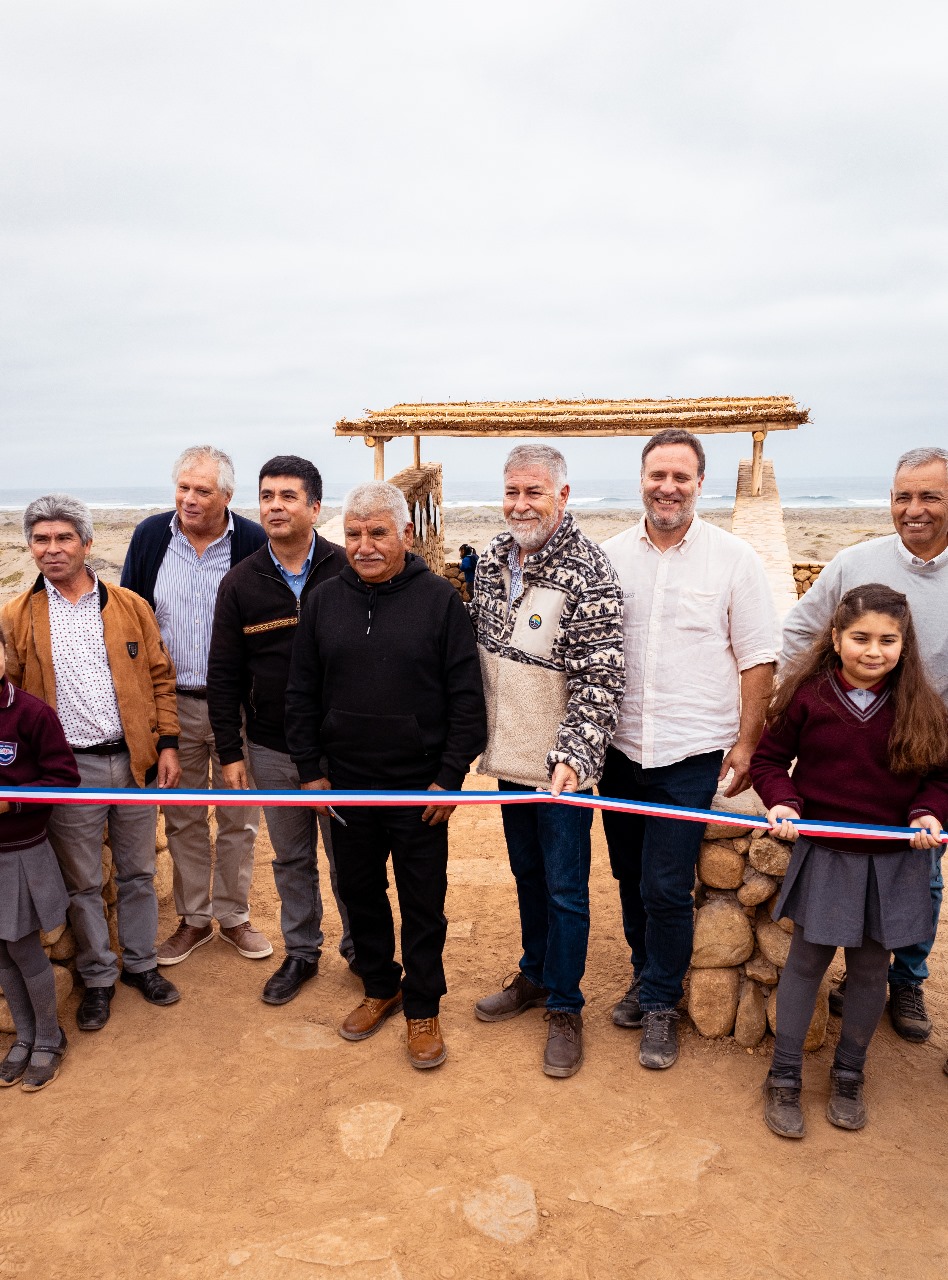
The viewing platform’s inauguration was attended by Leonardo Gros, Regional Secretary of the Environment; Daniela González, Canela Municipal Environment Officer; the board of directors of the Huentelauquén Agricultural Community (CAH); and representatives from the Hacienda and Cosmos Foundation, who are leading the design and construction of the esplanade and its points of interest.
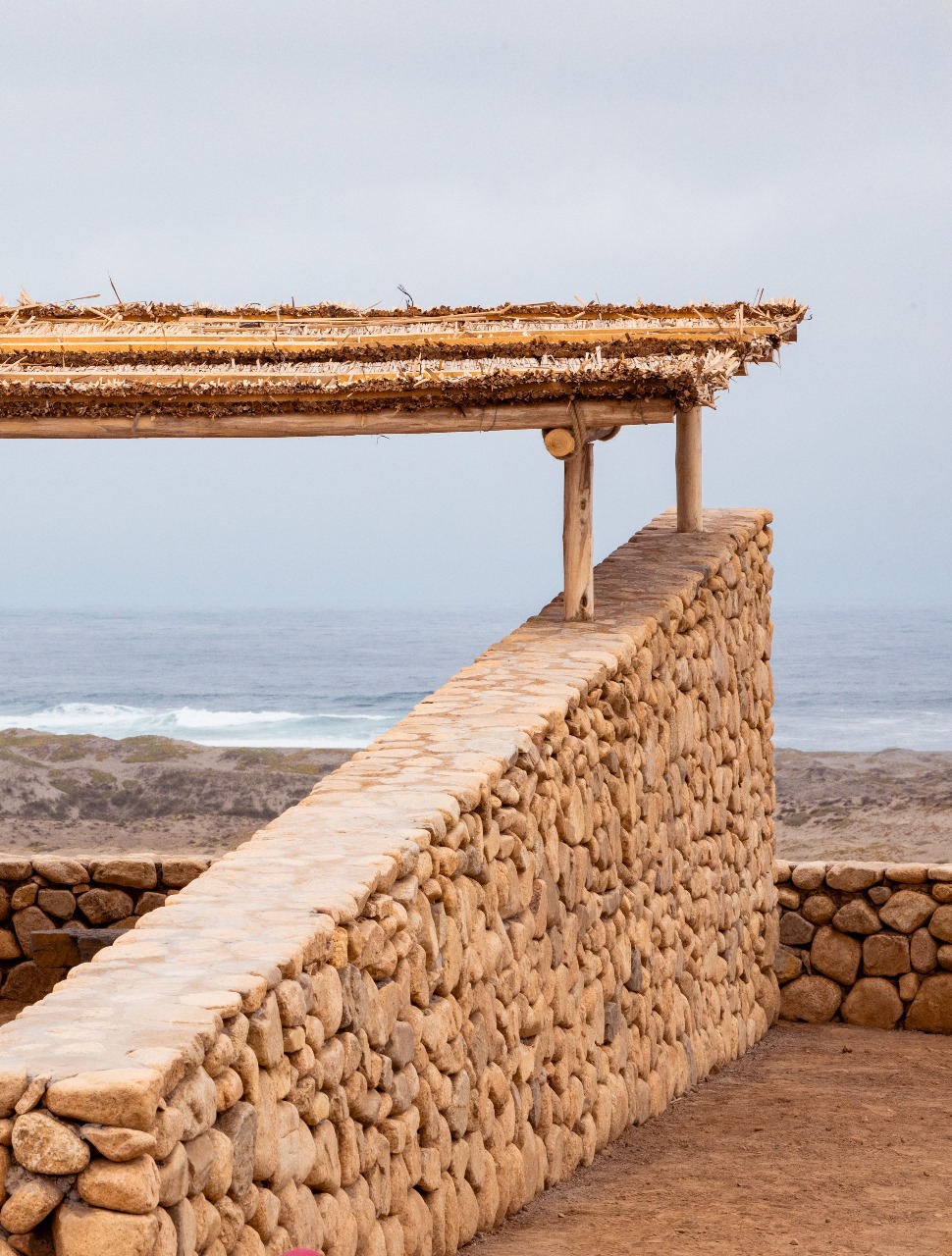
The Mirador del Mar (Sea Viewpoint) will offer visitors a breathtaking view of the Pacific Ocean to the west, providing a soul-searching experience. To enhance the diverse ecosystems, the Explanada de las Aguas project includes three additional viewpoints: southward overlooking the mouth of the Choapa Estuary; eastward overlooking the coastal mountain range; and northward overlooking the seasonal pools and streams, to enhance the experience and offer birdwatching opportunities or environmental education workshops.
The Regional Secretary of the Environment, Leonardo Gros, emphasized that “Thanks to this new observation deck, the biodiversity of the Las Salinas de Huentelauquén Ramsar Site will be respectfully observed. It is a new outdoor environmental education space and a tourist attraction for the province of Choapa, which will raise awareness among residents and tourists.”
Nevertheless, the 1,500 m2 civic space will make it possible to combine wetland conservation with the CAH’s traditional activities as stewards of the Las Salinas de Huentelauquén Wetland, home to at least 160 species of resident and migratory birds that use the site as a feeding, resting, breeding, and wintering area. It is part of the Ramsar site network, territories of international importance for biodiversity conservation.
“Natural and cultural heritage are indivisible and mutually modify each other over time. That is why the participation of the communities that inhabit the territory is fundamental to the design of culturally relevant infrastructure that serves a dual function: connecting people with nature and preserving their own history and that of their ancestors, and in turn, raising awareness about the conservation of fragile ecosystems whose ecosystem functions help us mitigate the effects of climate change and allow for the survival of thousands of species of flora and fauna,” explained Diego Urrejola, executive director of the Cosmos Foundation, the project coordinators and executors.
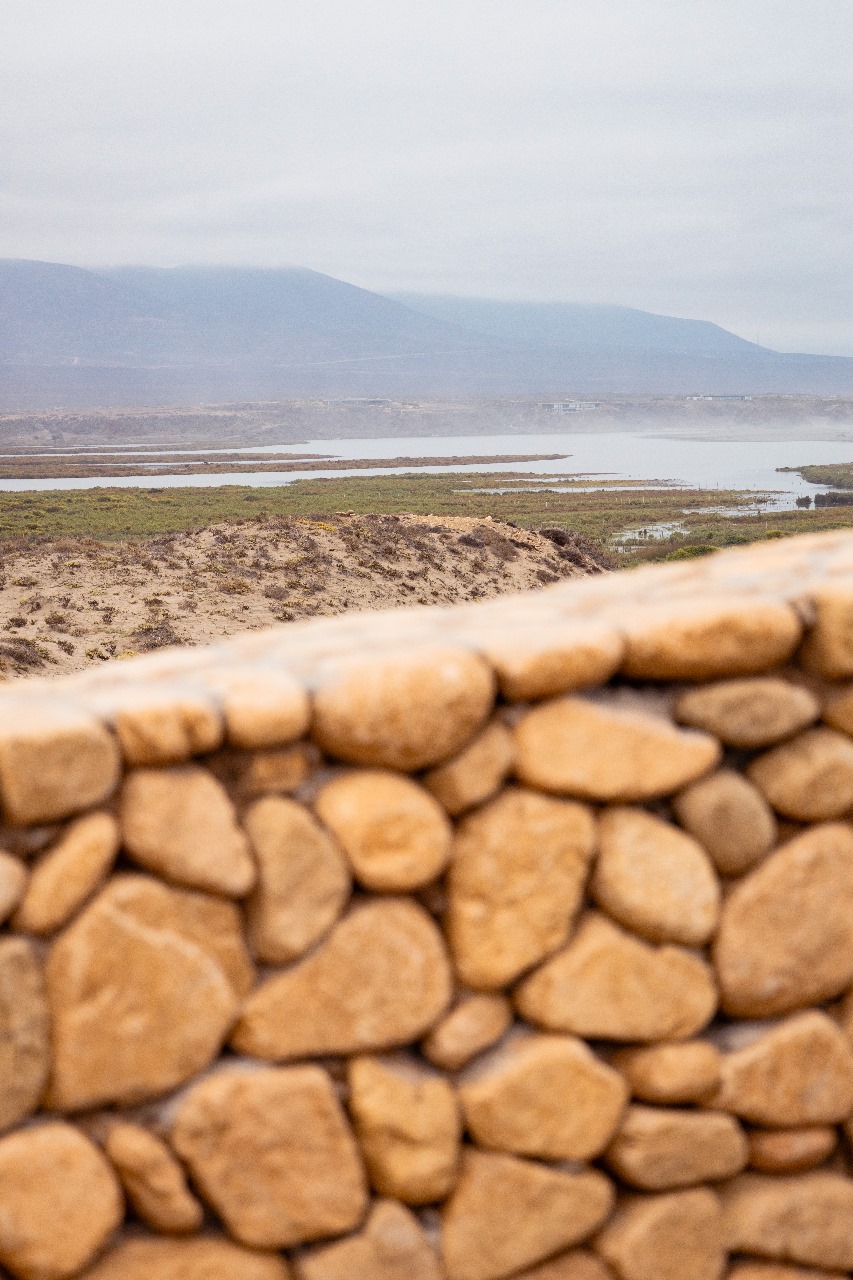
The esplanade will feature specially designed structures using native materials such as stone walls, eucalyptus beams, and totora reed roofs for the floor, benches, walls, and roofs, emulating the typical construction system of the area. The surroundings are complemented by xerophytic cactus gardens and docas, plant elements characteristic of the dune scrub that will be used throughout the circuit.
Daniela González, the Environment Officer for the Municipality of Canela, highlighted the municipality’s support in carrying out this project, collaborating with workshops and opening spaces with the community. “This viewing platform adds to the open classroom concept we have with the Municipality and organizations. The idea is that senior citizen clubs, kindergartens, and various groups can enjoy and learn from this space.”
The Mirador del Mar viewpoint was co-financed with the Ministry of the Environment’s FPA fund, contributions from the CAH (Central Administration of the Autonomous Community of Honduras) and the Treasury. The implementation of the next stages (other viewpoints, signage, landscaping, trails, etc.) will depend on the raising of public and private funds.