
A change against the current
- Publicado el 02.04.2023
- Escrito por Angel Fondon
The work being promoted by the Metropolitan Regional Government to create a River Basin Council, a body in which the Cosmos Foundation participates as part of the sponsoring group, is extremely important for these purposes. The governance pilot, which could be replicated nationally in the future, aims to be a space in which all sectors related to the use of water in the river basin are represented, not just those with water extraction rights. This will allow decision-making to be guided by user needs and ensure the efficient management of this element.
Every March 22nd, World Water Day is celebrated, serving as a reminder of the serious water-related problems we must address, such as access to drinking water and sanitation, pressure on water resources and ecosystems, and the growing risk of droughts and floods resulting from the climate emergency facing humanity.
There are relevant data we must take into account. Nearly 17% of the causes of water scarcity are directly attributed to the effects of the Climate Change scenario, while the remaining 83% are due to factors associated with human activities, such as poor water management and governance (44%) and increased demand (17%).
Just last January, a historic event occurred that underscores the water crisis we are experiencing. As a result of the hypercycle of drought in the central region (an effect of climate change) and extractions inconsistent with upstream availability, the Maipo River—on which 70% of the drinking water demand in the Metropolitan Region and 100% of the province of San Antonio depend—recorded a flow of less than 2 m3/s (2% of its normal flow). This prevented it from overflowing a sandbank accumulated at the mouth by strong surges (also an effect of climate change), causing the river to silt, flooding farmland, and posing health risks to the community.
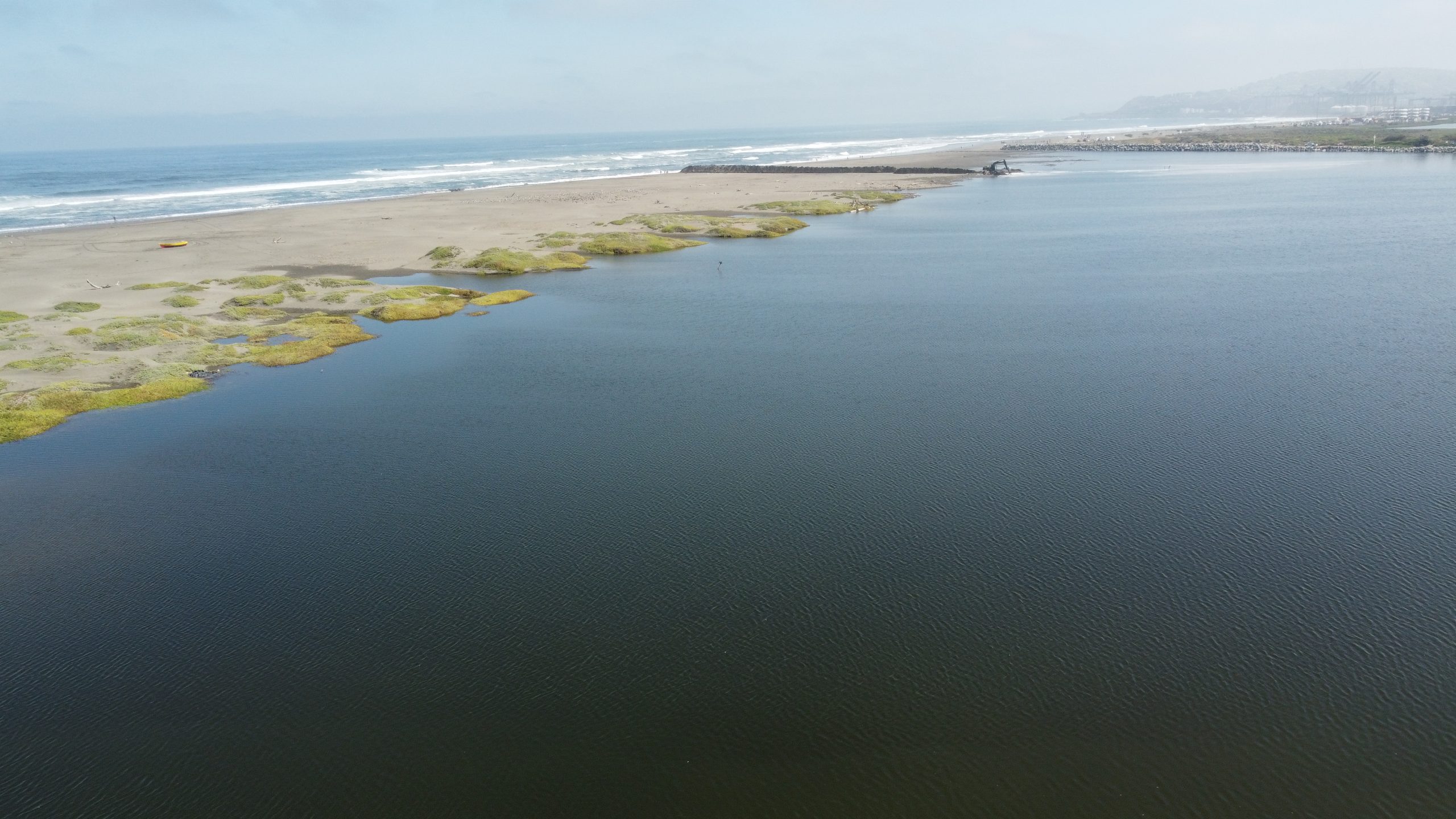
The short-term solution to this emergency was to open an artificial ditch to reconnect the river to the sea. However, these problems require long-term planning, which requires changing the way we approach the problem and managing it in a comprehensive and sustainable way over time.
First of all, it’s time to stop talking about “resources” and instead talk about “elements.” Water cannot be placed on the same level as resources like copper, lithium, timber, or livestock. Nearly 60% of the human body is composed of water, which naturally elevates this element to a higher category, requiring special treatment.
Secondly, it is imperative to update our institutional framework for water management. Today, those with a voice and vote are the holders of “water rights,” which is clearly an anomaly, since decision-making cannot be solely in the hands of those who hold this status, to the detriment of “water users,” who are not limited only to the entire population but also to nature itself, whose biodiversity depends on water for its survival.
And thirdly, it is necessary to overcome the political and administrative divisions into which we organize the territory—that is, communes, provinces, regions, macro-zones—because they are nothing more than artificial constructs that we, as a society, equip ourselves with for public administration, not for ecosystem management.
The work being promoted by the Metropolitan Regional Government to create a River Basin Council, a body in which the Cosmos Foundation participates as part of the sponsoring group, is extremely important for these purposes. The governance pilot, which could be replicated nationally in the future, aims to be a space in which all sectors related to the use of water in the river basin are represented, not just those with water extraction rights. This will allow decision-making to be guided by user needs and ensure the efficient management of this element.
Institutional and cultural changes take time, but this is a big first step toward rethinking how we manage this element. On World Water Day, the call is for a counter-current shift, so as to avoid situations like the one that occurred this summer on the Maipo River in the future.